

Visit from Rurrenabaque: Madidi Park and the Yacuma Pampas. Visit from Trinidad: Buffalo‑hunting Route
About the Amazon
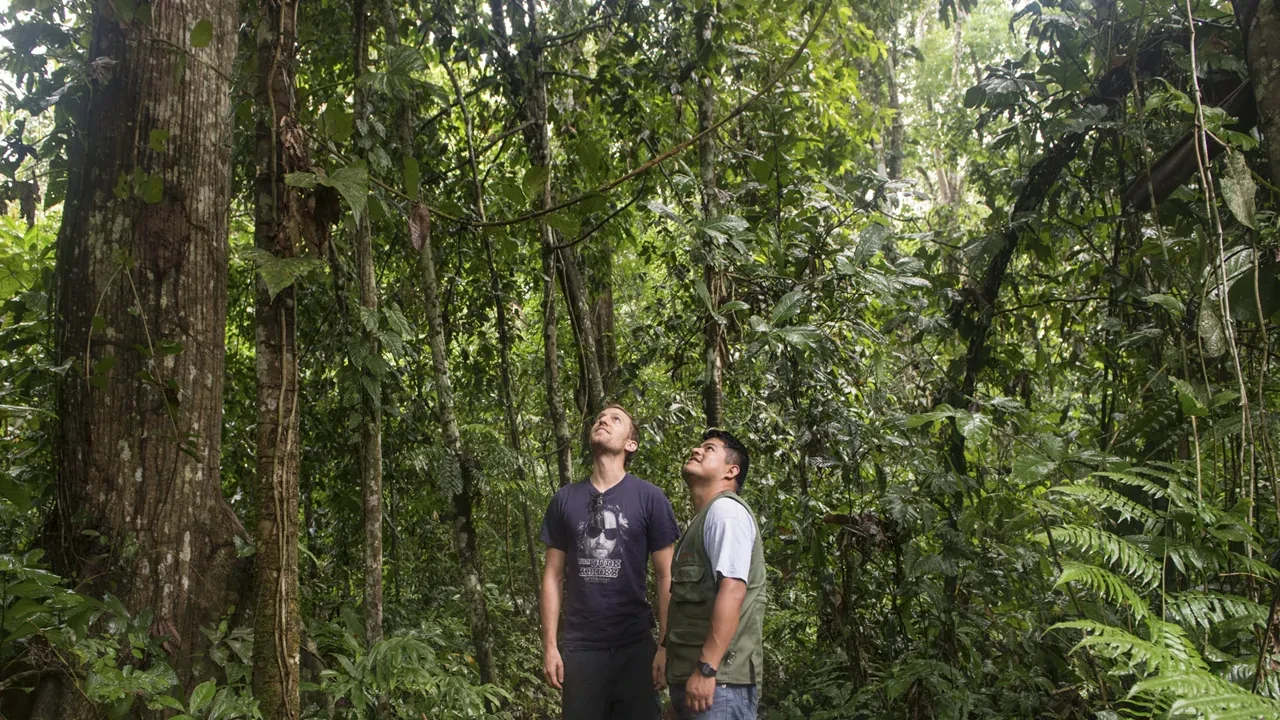
The Amazon encompasses the vast tropical rainforest of the Amazon Basin, the largest tropical forest on the planet. In Bolivia, the Amazon Jungle accounts for roughly 35 % of the national territory, featuring extensive areas of primary forest and extraordinary biodiversity. This region is essential for climate regulation, carbon sequestration, and South America’s water balance, while also safeguarding indigenous cultures that maintain an ancestral relationship with the natural environment.
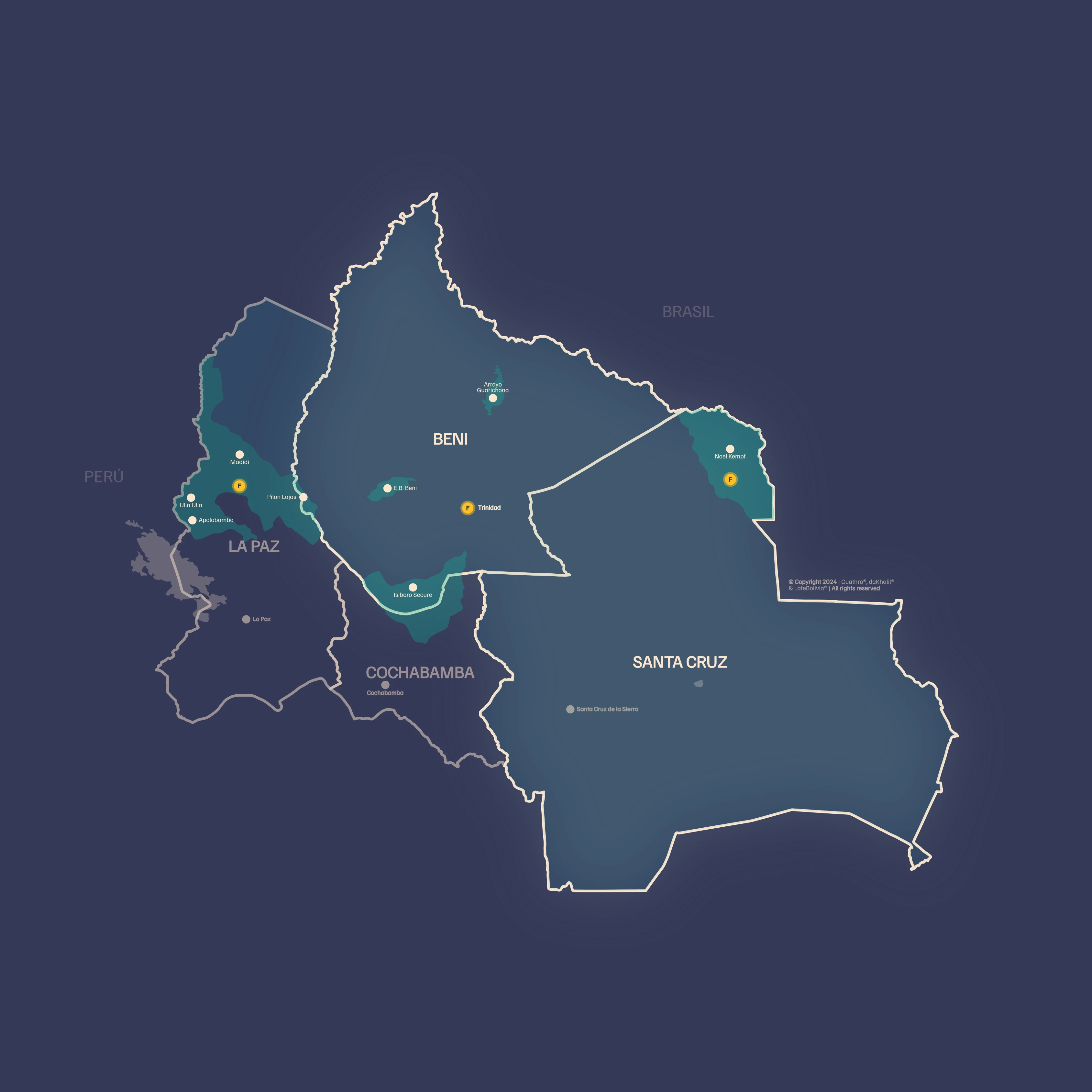
From Rurrenabaque you can reach two of the most emblematic destinations. Madidi National Park is one of the most biodiverse protected areas in the world, with ecosystems descending from the Andes to the lowland Amazon, allowing observation of birds, primates, and a huge variety of flora. Likewise, from Rurrenabaque you visit the pampas, especially the Municipal Reserve of the Yacuma River Pampas, where boat trips enable spotting buffalo, caimans, capybaras, and abundant birdlife in floodable savannas.
From Trinidad you explore the Ibare‑Mamoré Protected Area, a landscape of rivers and wetlands where it is also possible to see buffalo and take cruises on Amazonian riverboats. This experience combines comfort and nature, establishing Bolivian Amazonia as a strategic destination for sustainable ecotourism.
Rurrenabaque and Trinidad
Rurrenabaque
➔ Madidi National Park and Yacuma River Pampas
Madidi National Park and Integrated Management Natural Area is a destination of incomparable natural beauty where 3,235 species coexist in perfect harmony with humans and Mother Nature.
It is a park whose overwhelming beauty causes visitors to return repeatedly, enchanted by the charm of the Bolivian Amazonian tropics.
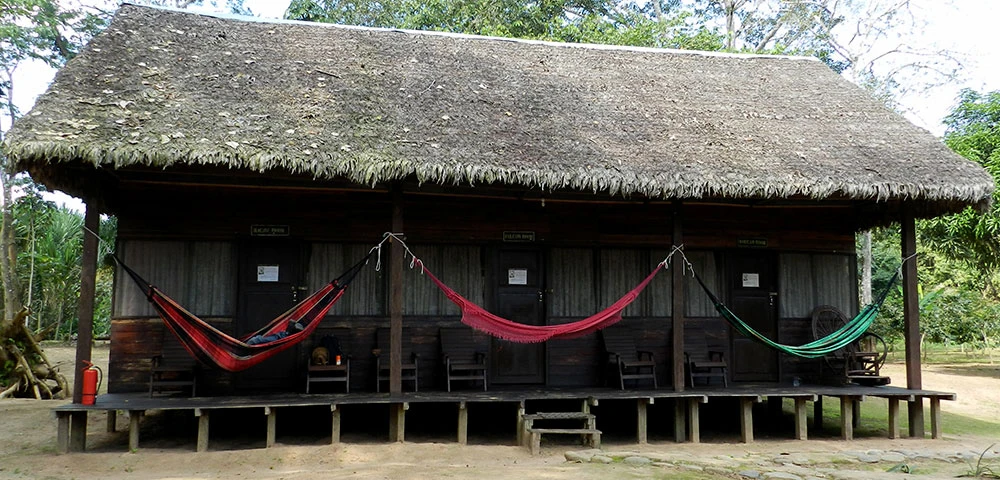
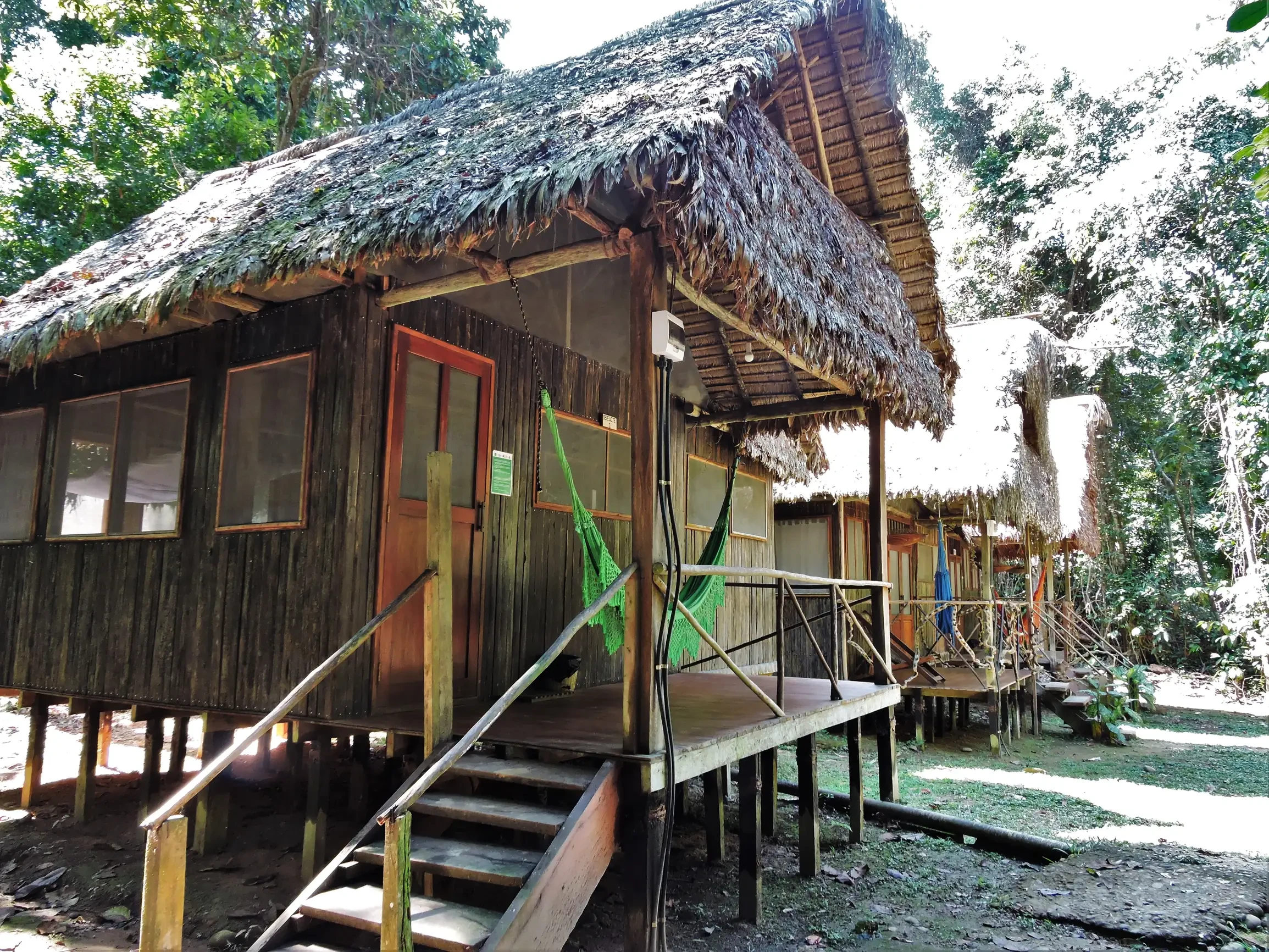
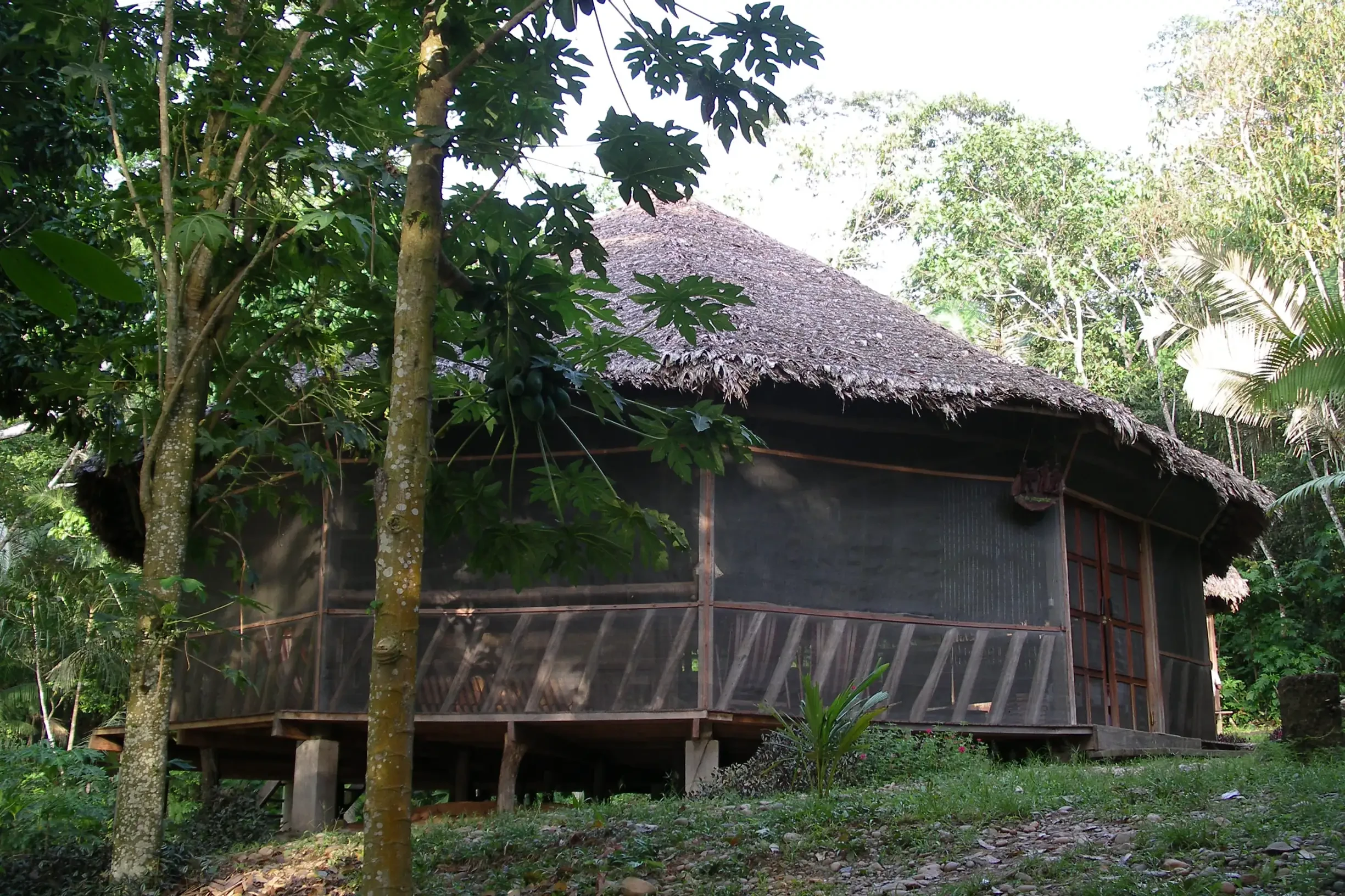
To strengthen the appeal of this Bolivian tourist zone and in coordination with community initiatives of the Tacana and Makawa ethnic groups, together with private tour operators, eco‑lodges are being implemented in Madidi, Ixiamas and the Yacuma Pampas. In this way, communities are supported to benefit from the natural reserves of our country.
On the other hand, the Municipal Reserve of the Yacuma Pampas is another of Bolivia’s most visited tourist destinations, due to its unique fauna and flora worldwide. In this place support was given to the Las Tortugas lodge, the only one in the world with a direct relationship to the animal species of the Bolivian Amazon.
Access to these “Jungle and Pampas” adventure destinations is via the town of Rurrenabaque, which is a 50‑minute flight from the city of La Paz.
Trinidad
➔ The Buffalo‑hunting Route and the Ibare‑Mamoré Protected Area
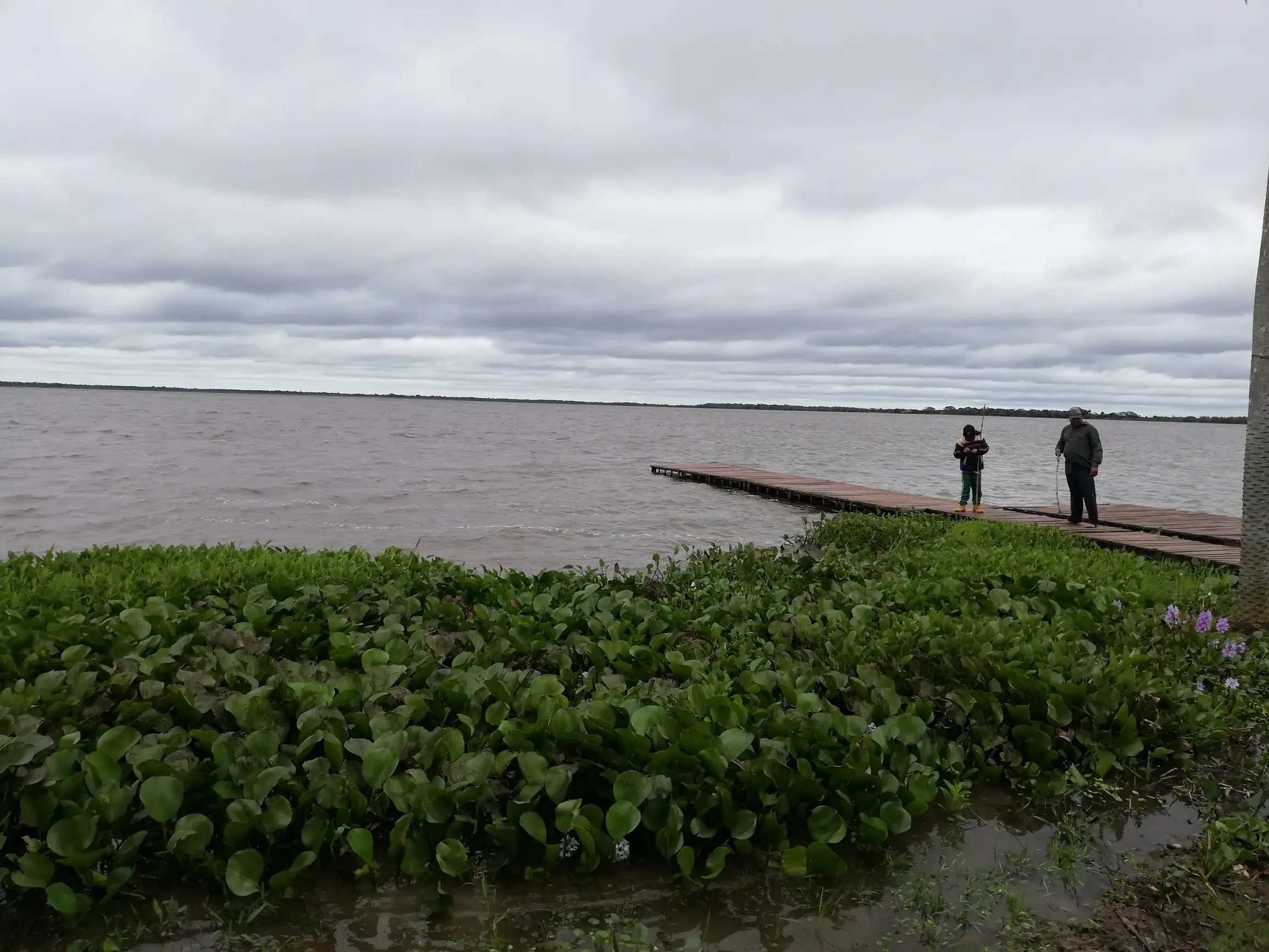
The city of Trinidad, the second reduction founded by the Society of Jesus (the Jesuits) in the Moxos lands, is surrounded by rivers, pampas and associated wetlands that cover much of the Beni department. These ecosystems constitute the third‑largest complex in South America and the largest in the Amazon basin, representing a unique and special ecoregion, historically and geographically distinctive, with landscapes dominated by interrupted wet savannas surrounded by a variety of forests and large swamps that retain water year‑round, forming a broad mosaic of different vegetation types.
Trinidad is a communication hub for land, air and river transport, since from this city one can reach, by any of the mentioned routes, all the towns of Beni.
The temperature in Trinidad is warm; the tropical climate has an average annual temperature of 27 °C with sharp but brief drops during the winter period (June, July and August).
Two kilometres from the city is the “Jorge Henrich” airport, which also has a ground terminal for trips to Santa Cruz and the north of Beni: Guayaramerín, Riberalta and Cachuela Esperanza; passing through San Ignacio, San Borja, Yucumo, Rurrenabaque, Reyes and Santa Rosa del Yacuma.
The city’s gastronomy is varied, featuring typical dishes such as majadito, locro de charque, keperi, surubí and pacú, fried charque, rice bread, corn empanada, cuñape, among others.
Finally, Trinidad has banks and financial services, and ATMs in the city.
What can I visit in Trinidad?
➔ Buffalo‑hunting Route – The Bolivian Pink Dolphin (Inia boliviensis)
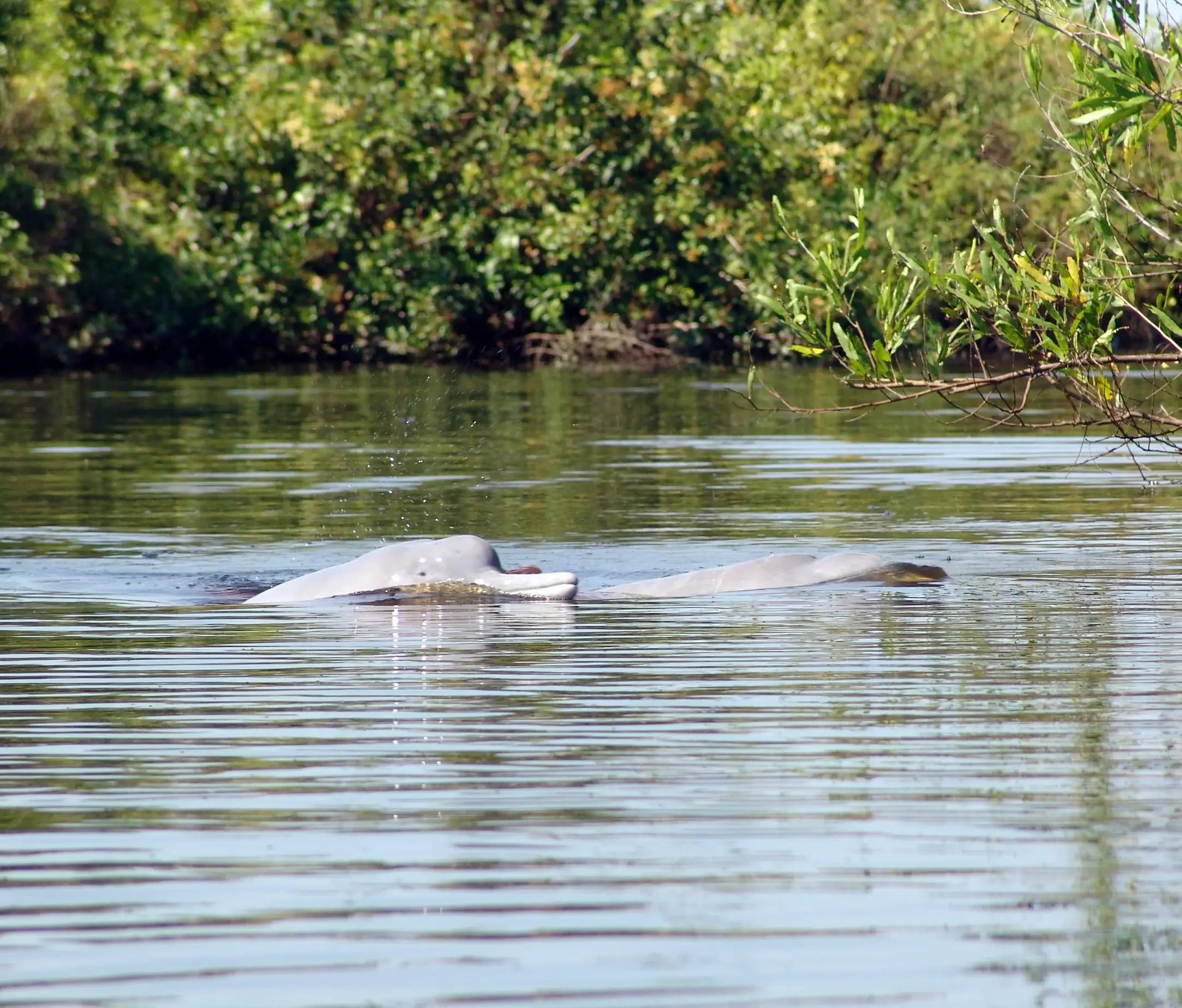
This activity allows the observation of the pink river dolphin (Inia boliviensis), an endemic and unique species in the world. This cetacean inhabits the Ibare and Mamoré rivers, which belong to Bolivia’s Amazon basin.
During the tour you will be able to visit settlements close to the Amazon rivers such as Puerto Ballivián, which is only minutes from the city of Trinidad on the Ibare River. From this point you will enter the Ibare‑Mamoré Protected Area.
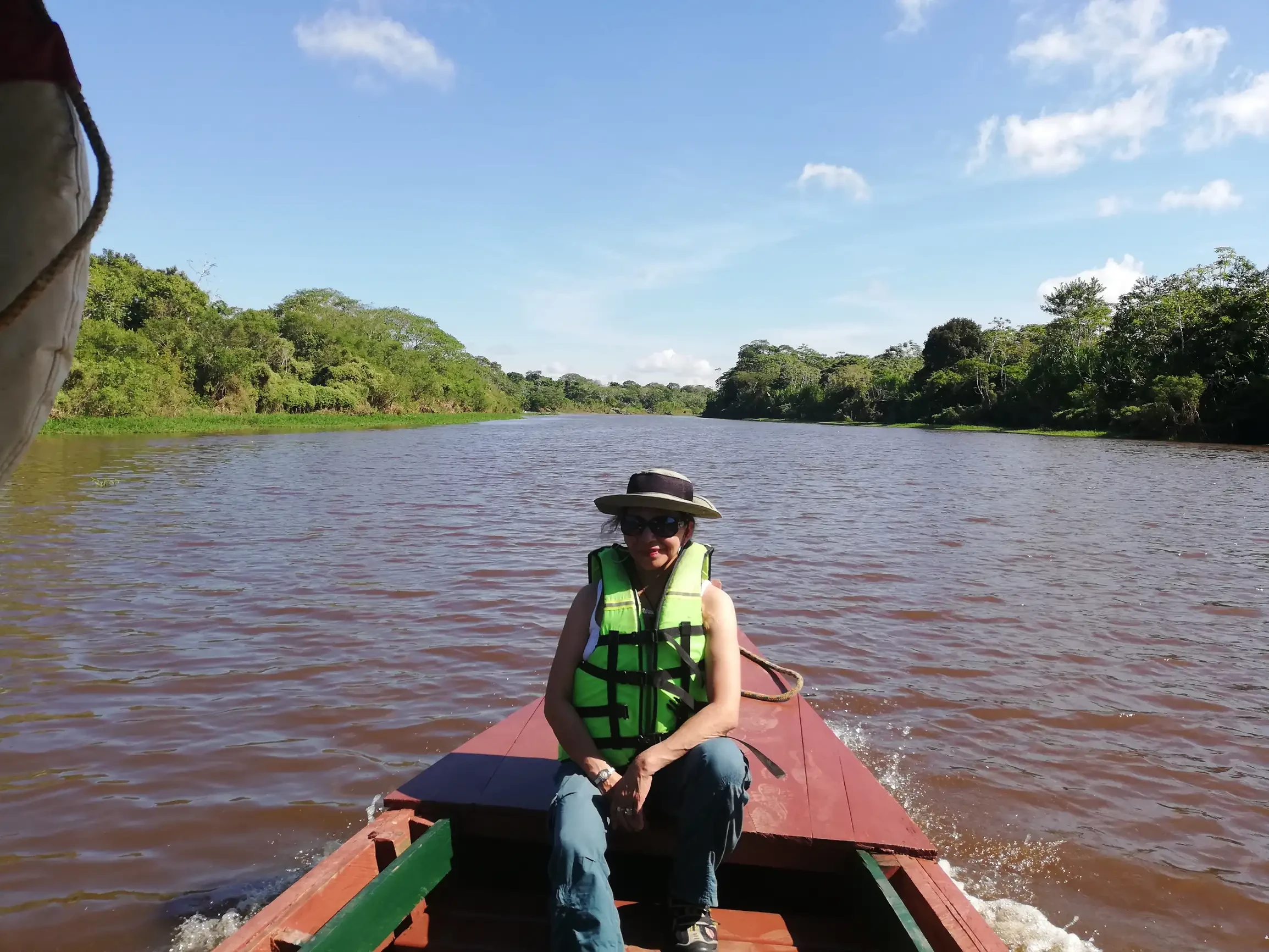
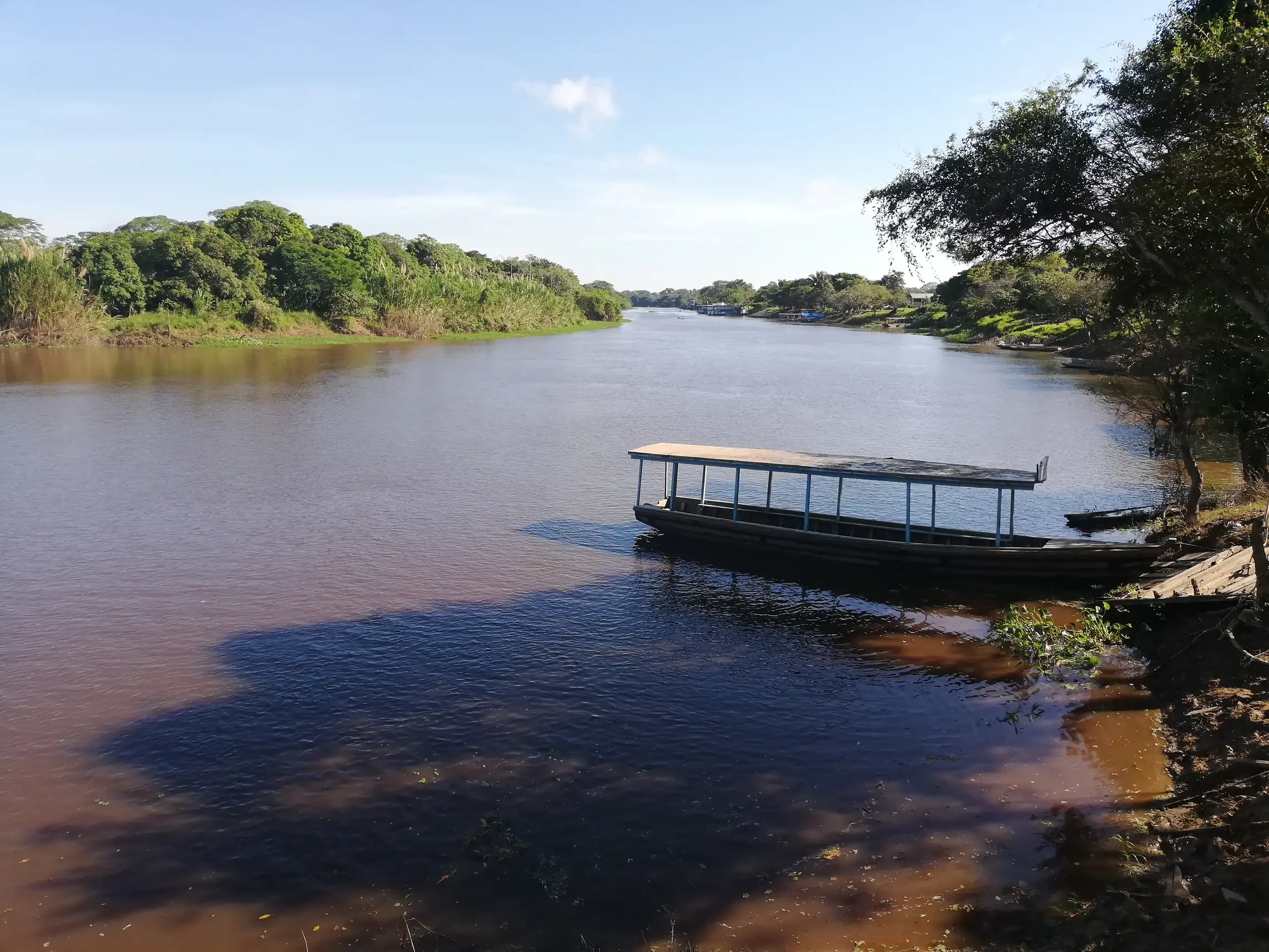
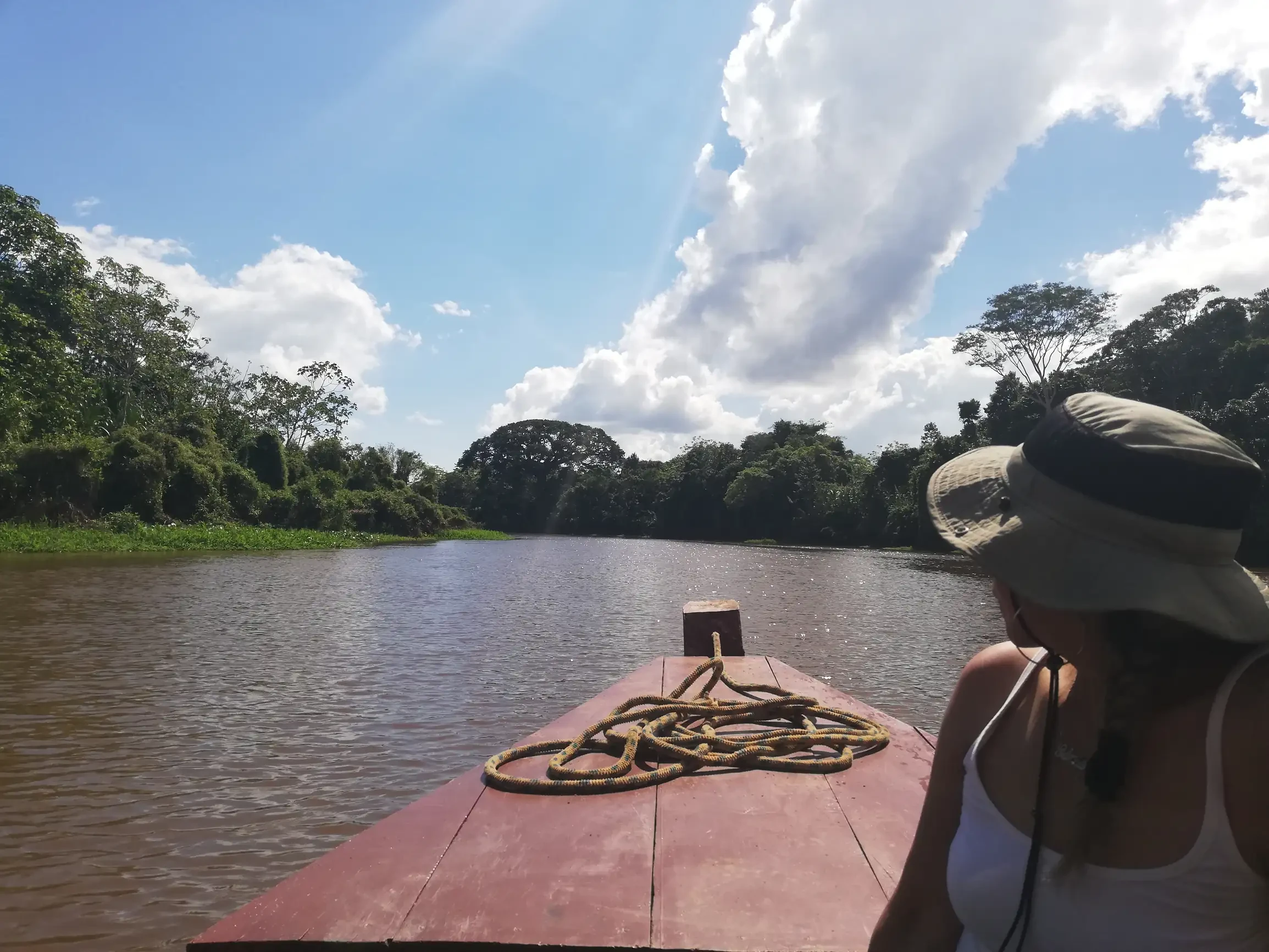
A motor‑boat ride along the Ibare River is a fascinating experience for observing local wildlife, continuing until you reach the mouth of the Mamoré River, the largest river in Bolivia.
In this area you can see the pink dolphins; if you wish, you may wade into the river and swim near them!
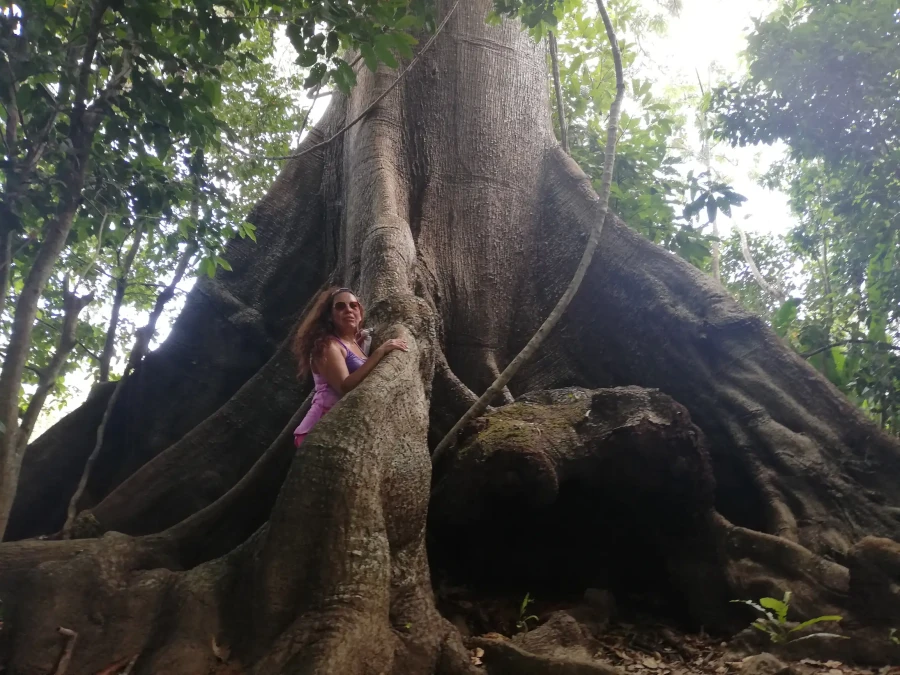
Another small settlement to visit will be Loma Suarez, which has a historic centre, and finally we will visit the indigenous community of San Carlos, where the park’s biggest forest monument is located: El Mapajo, the giant Amazonian tree.
➔ Flotel “Reina de Enin”
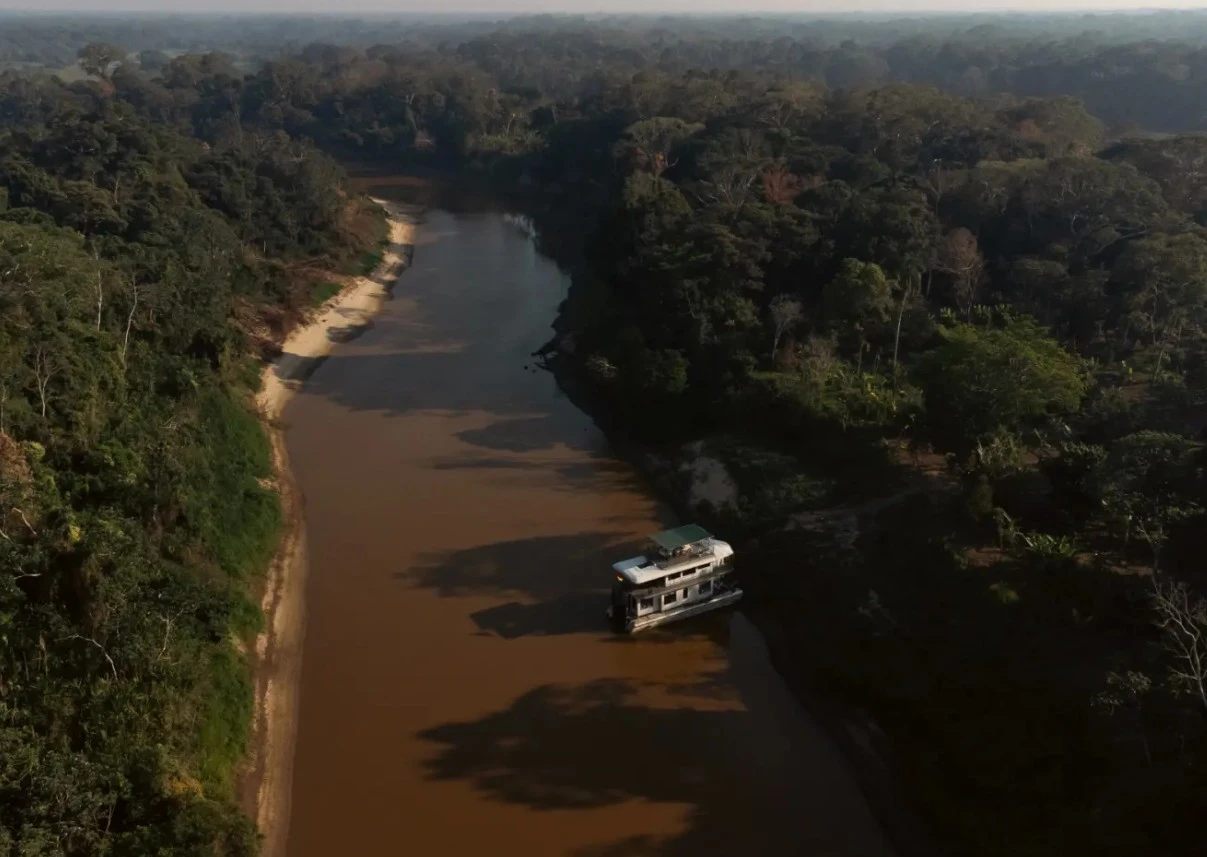
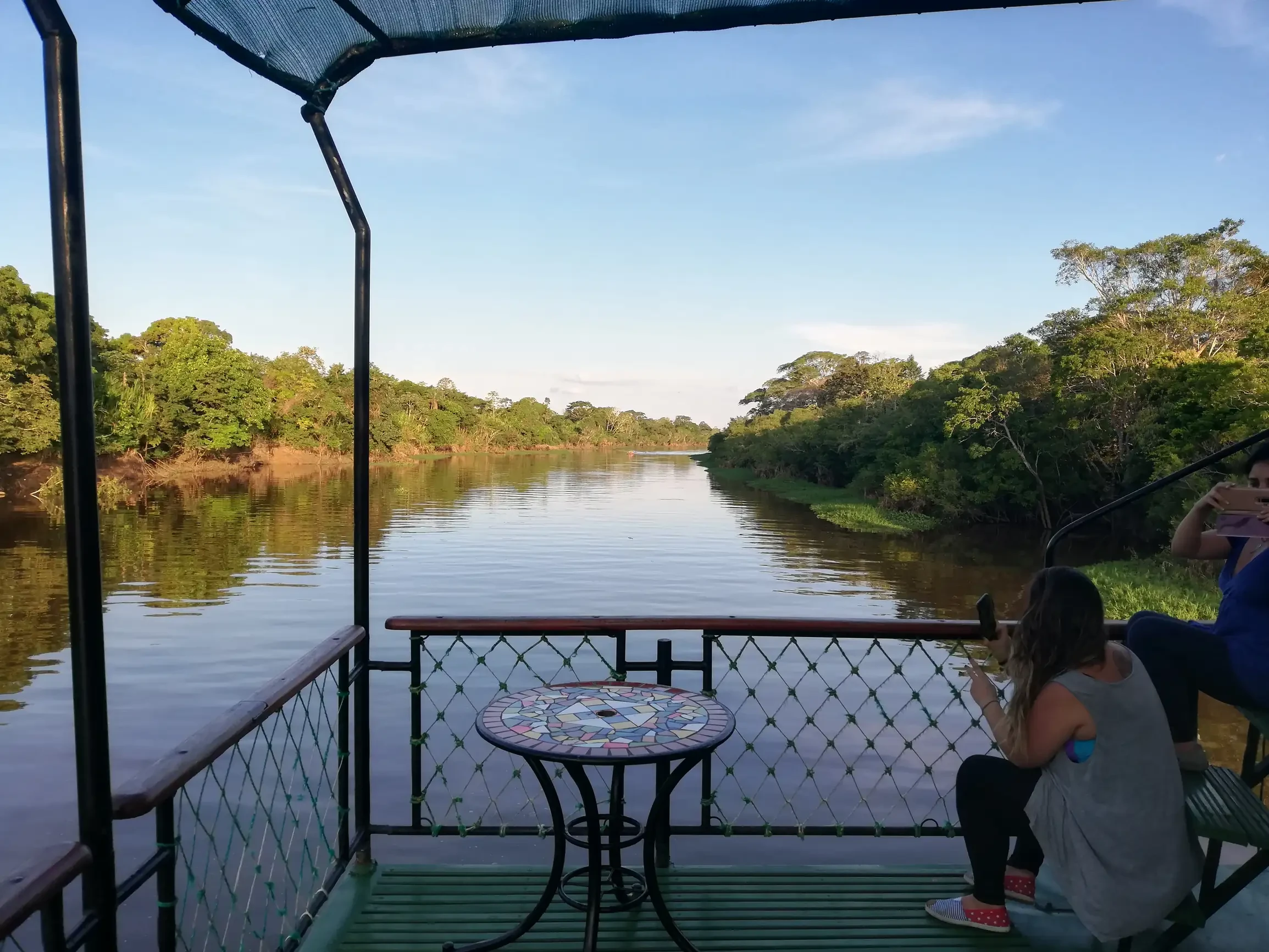
Navigation aboard a comfortable floating flotel on the Ibare and Mamoré rivers, always escorted by river dolphins, unique in the world. Trips can last from 3 to 7 days, during which the following activities are interspersed: swimming with river dolphins, observation of emblematic Amazonian animals, visits to communities with night outings to observe caimans, hikes on trails, fishing in lagoons.
➔ The Cathedral
It is located on the south side of the Main Plaza. The cathedral is in Neo‑Romantic style, with two tall bell towers on the central block, designed by Spanish architect Martin Pascual.
➔ Ethno‑archaeological Museum “Kenneth Lee”
The rooms display samples of utilitarian ceramics from the so‑called Hydraulic Culture of Moxos. The museum is the gateway to that impressive world, a hydraulic complex that characterized the water culture.
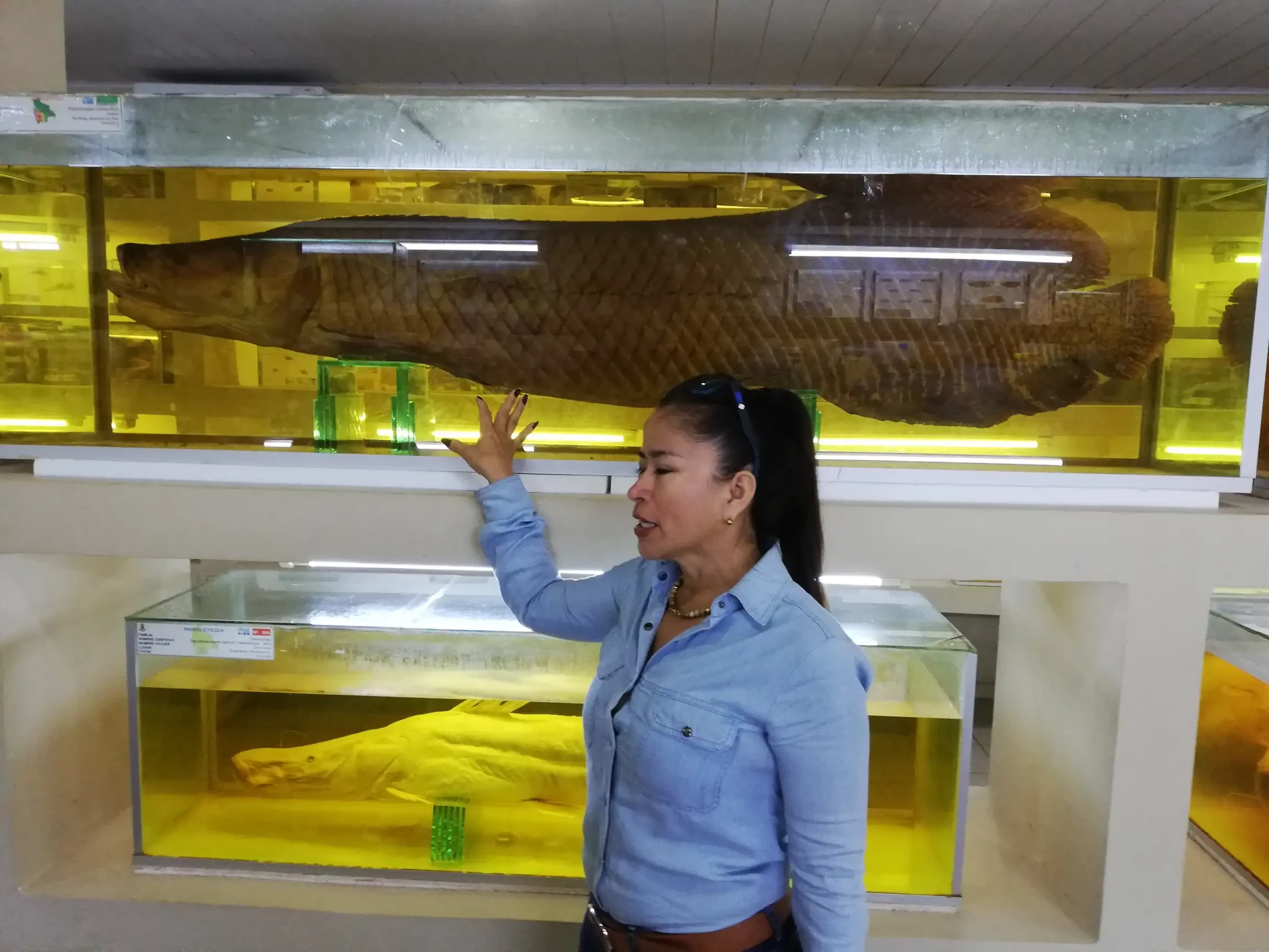
➔ Ichthyological Museum
It houses specimens of more than 400 aquatic species from the Bolivian Amazon and is considered the third of its kind in South America.
➔ Moxos Craft Center
Where you can find textiles made by indigenous people, of various materials, wood carvings, necklaces of native seeds, traditional costumes.
➔ Pantanal Park – (Serpentarium)
It is a green area, structured to admire on a small scale the Beni landscape. It has ponds that showcase the beautiful Victoria regia, an aquatic plant of singular beauty. In this urban walk there is a serpentarium that houses a huge anaconda (Eunectes murinus) of 9 m.
➔ Suárez Lagoon
It is an artificial lagoon, declared by law as a Natural Ecological Heritage. Located 5 km from the city centre. Food and recreation services are offered at the various tourist bathing facilities.
The ports located on the banks of the Ibare and Mamoré rivers—Puerto Almacén, Puerto Ballivián, Puerto Varador and Loma Suárez—are places full of natural charm, where you can appreciate original landscapes and at the same time savor the abundant rich fish in these rivers.
➔ Chuchini Tourist Center
This attraction allows contact with the past through its displays of ancient crafts recovered on site.
Important notes
Availability:
✓ Tours are available every day of the week.
Requirements:
✓ You may be asked to present identification, such as your passport.
✓ Upon entering Bolivia you will be required to show your International Yellow Fever Vaccination Certificate.
✓ Bring lightweight clothing, preferably in light colours.
✓ Due to the intense sun, it is recommended to wear sunglasses, long‑sleeve shirts and a cap or hat.
✓ Do not forget sunscreen, especially if you plan to walk around Suárez Lagoon or any of the nearby rivers.
Important data:
✓ Especially during the rainy season (December to March) do not forget mosquito repellent.
Health information:
✓ Make sure you are in good health and have enough stamina to participate without difficulty.
Includes
Not Included
Tripadvisor


Request a quote
Adventure in the Amazon Jungle
From 3 to 6 days