



Travel Information of the Bolivian Altiplano
About the Bolivian Altiplano
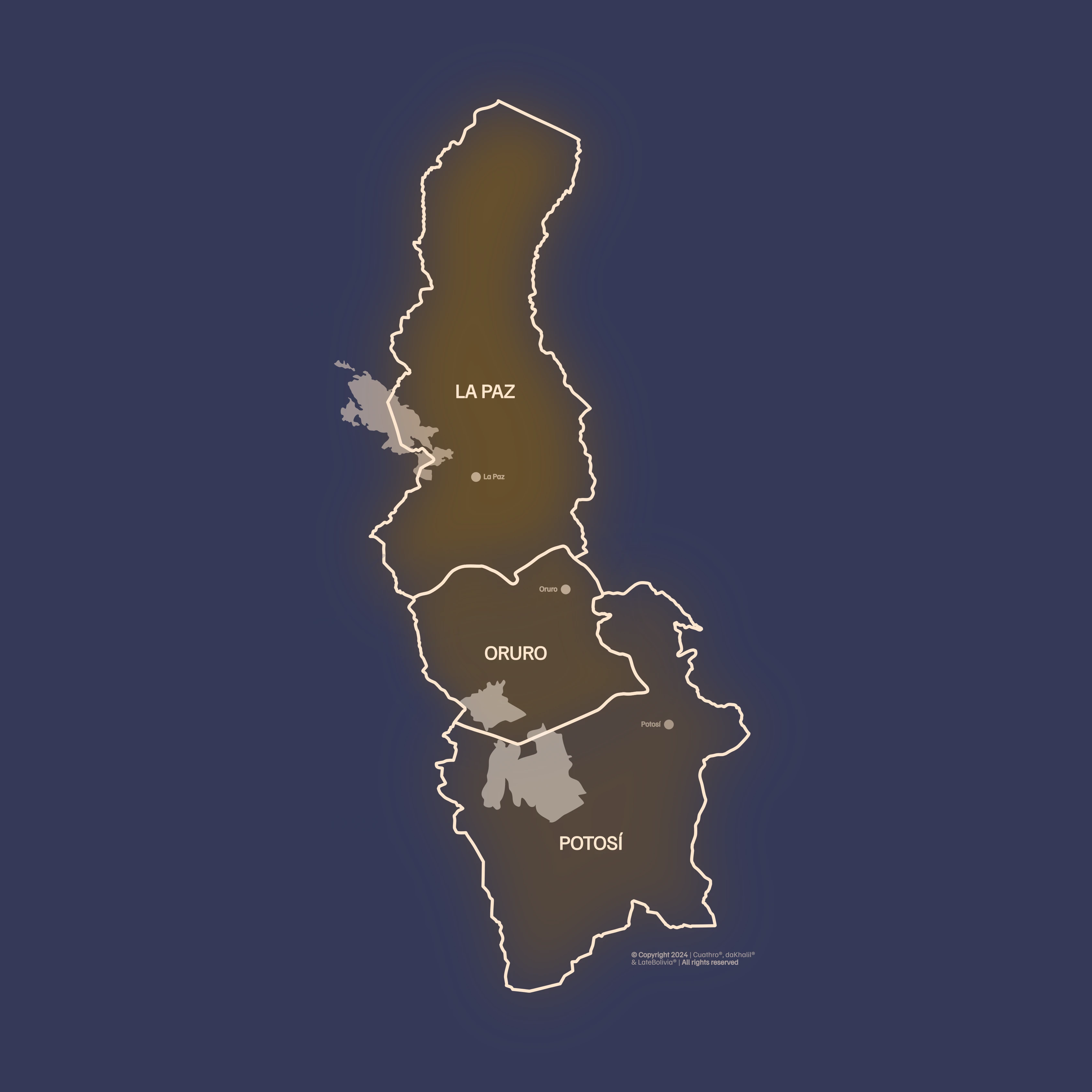
Between two mountain ranges of incomparable beauty—the Real or Oriental Range and the Western Range—lies a territory of more than one hundred thousand square kilometers, with an average altitude of about 3,800 meters above sea level. For someone visiting this place for the first time, the visual impact is imposing; the visitor will appreciate a nearly endless desert plain, framed by a series of snow-capped peaks.
This plain is cut by some natural undulations, giving the appearance that behind them the spectacle will always be uniform: a gray landscape, barely painted yellow by the "paja brava" or dark green by the "thola," which, however, turns green during the rainy season.
Traversing the mountainous and high-altitude zones, one finds the habitat of camelids—llamas, alpacas, and vicuñas—domesticated since ancient times and constituting the basis of the region's economy. We also find animals such as the deer, puma, wild cat, and large rodents like the viscacha and chinchilla. Likewise, among the birdlife, there is the condor, the golden eagle, the parihuana or pink flamingo; varieties of waterfowl like the wallata, and also wading birds.
The vegetation of the high mountains consists, among others, of grasses like "paja brava," "thola," and "yareta." One can also observe forest species like "queñua" and "kiswara." Finally, among native plants, we can cite the potato, oca, quinoa, tarwi, cañahua, and amaranth, among others. The latter are considered foods of high nutritional value that are part of the region's gastronomic offer.
Capital Cities
La Paz
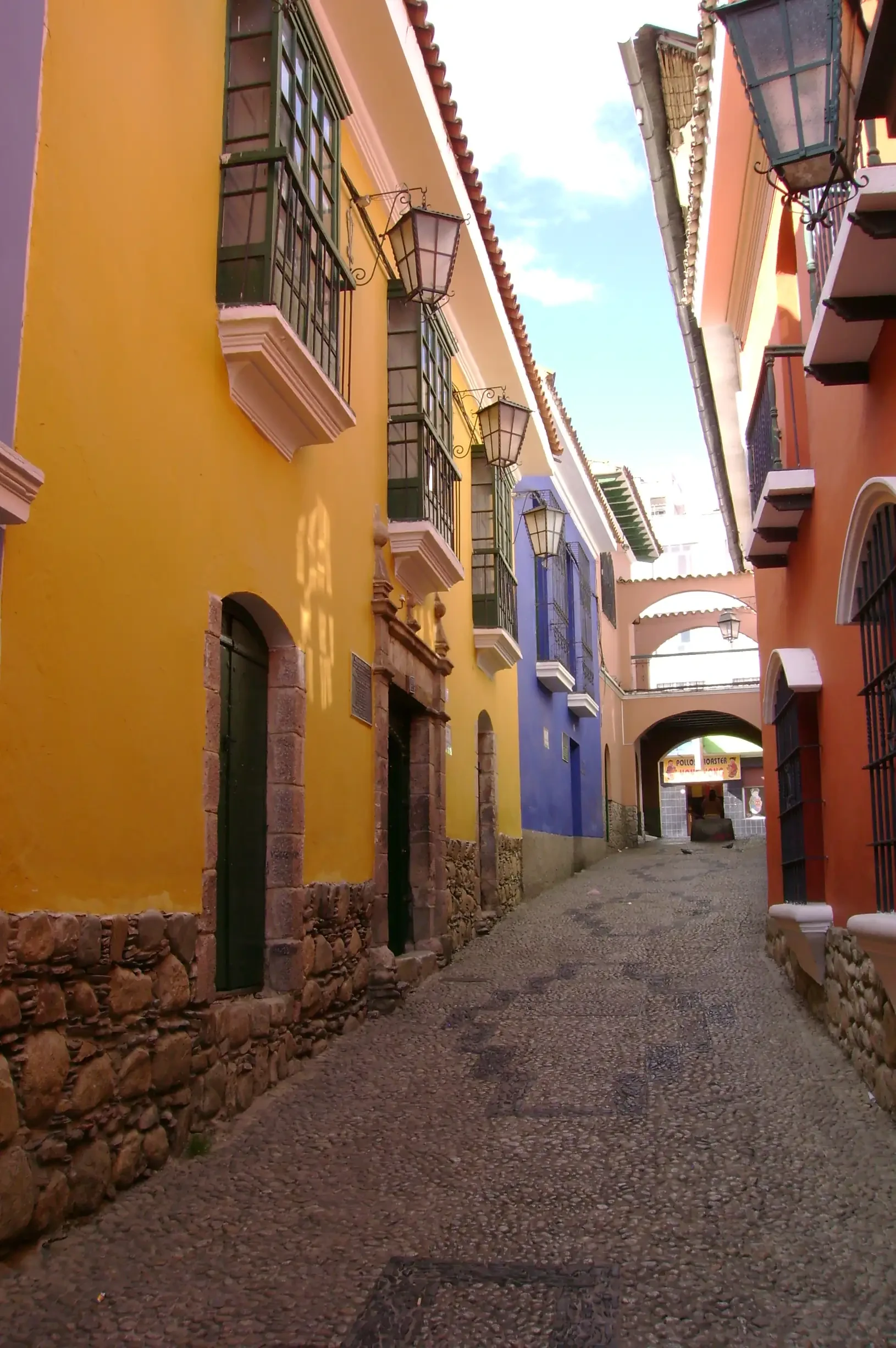
It is the highest seat of government in the world (located at 3,650 m asl, 300 meters higher than the city of Cusco – Peru) and is characterized by a personality unparalleled among Andean cities, due to the cultural, religious, and political conjunction that has marked it throughout its history. Its location, in a basin at the foot of the snow-capped Illimani, the highest and most attractive mountain of the Real Range of the Andes, allows its inhabitants to enjoy incredible and diverse landscapes wrapped between mountains and buildings.
The city of La Paz was founded in 1548 by Spanish colonizers under the name "Nuestra Señora de La Paz," alluding to the end of a civil war fought between two Spanish factions. This founding took place in the town of Laja, 35 km from what is today the city of La Paz. Due to the inclement climate of the Altiplano, three days later the city was moved to a valley next to the Choqueyapu River, warmer and more populated.
Today, La Paz is the most cosmopolitan city in the Andes, with almost 1 million inhabitants; its agglomeration includes two cities, El Alto and La Paz, whose combined populations exceed one and a half million. The city of El Alto is a record-breaking city for being the youngest in the country, the one with the highest demographic growth, the one hosting the country's largest informal fair (La Feria 16 de Julio), and the one with the greatest political influence in recent years.
Potosí
It is the capital of the department of Potosí; the city is located at an altitude of 4,000 meters, making it the highest city in the world. It rests at the foot of the hill "Sumaj Orck'o" or 'Cerro Rico', a mountain that was the most important silver deposit in the world during the colonial era, giving rise to most of the silver used by the Spanish Crown. According to official records, 45,000 tons of pure silver were extracted from Cerro Rico between 1556 and 1783.
Potosí was founded in 1546, rapidly generating enormous wealth, becoming one of the largest cities in the world at the time, with a population of over 200,000 inhabitants. Tradition says that the amount of silver the Spanish conquerors found would have been enough to build a bridge completely made of silver from Potosí to Europe.
During the battles fought for Bolivia's independence, much of the wealth was looted or transferred to Europe or other parts of the Spanish domain. By then, the population was no more than 10,000 inhabitants.
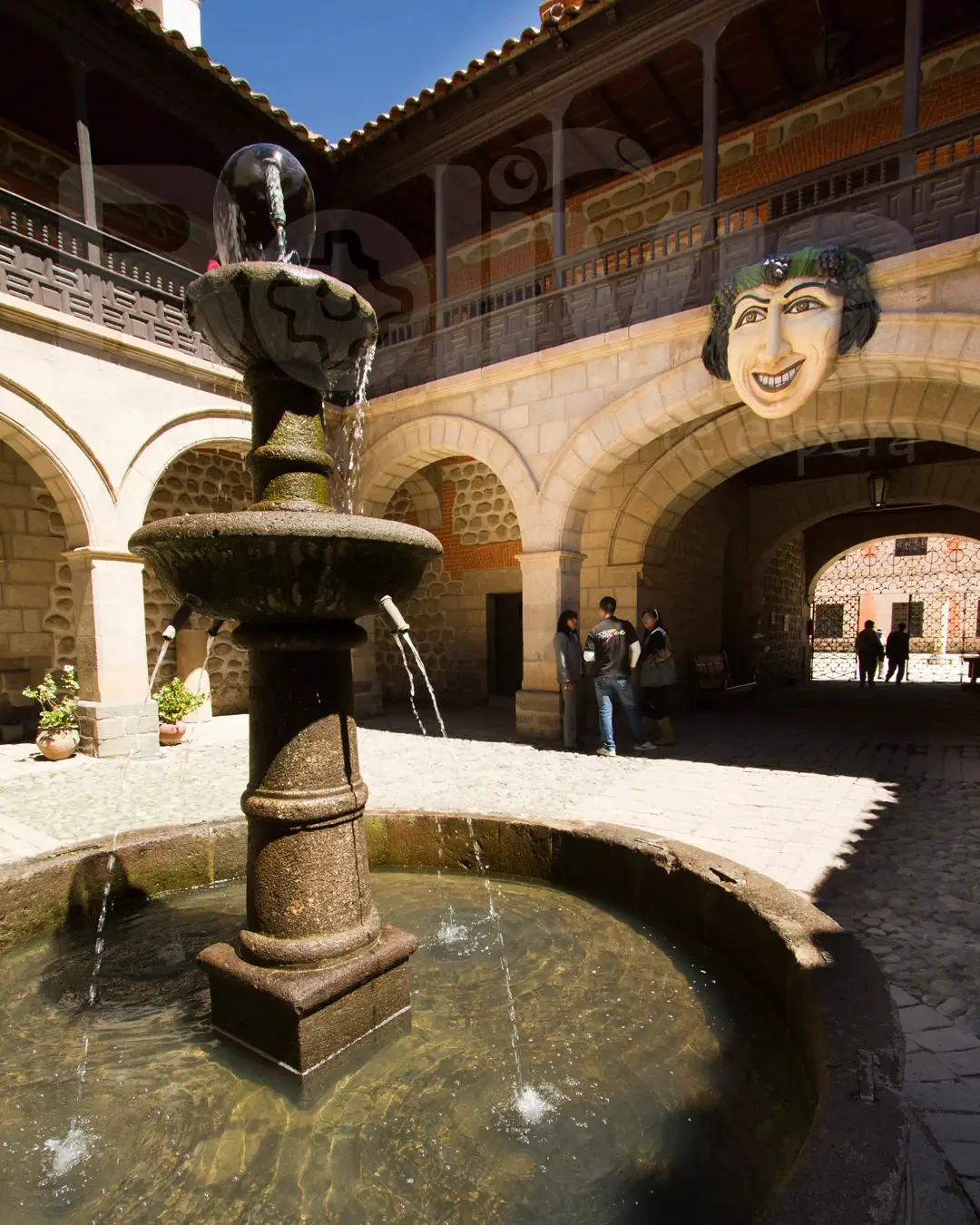
Like Sucre, Potosí is also on the UNESCO list of World Cultural Heritage sites. Tourist Attractions: The mines of Cerro Rico, The Casa de la Moneda (Royal Mint), The Cloister of Santa Teresa.
Oruro
A city founded during the colonial period, in 1606, as a silver mining center in the region of the Urus, initially called "Villa de San Felipe de Austria." In 1781, Oruro gave rise to the first cry for liberty in Latin America, expelling the Spanish and declaring the villa independent.
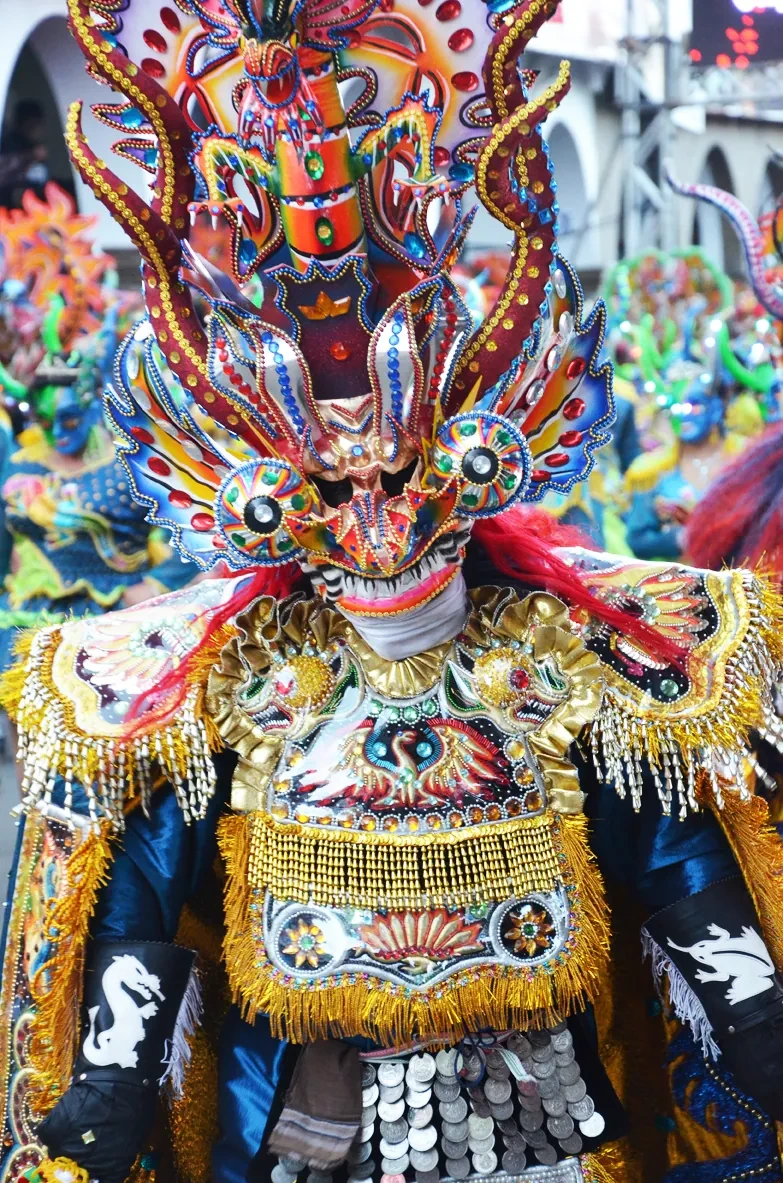
Today it is one of the smallest cities in the country; however, it retains its attractive European-style design from that era. The most important activity is the Carnival of Oruro, declared in 2001 as a "Masterpiece of the Oral and Intangible Heritage of Humanity" for the great religious and cultural value displayed during 2 days of parade.
Among the most important dances presented in the Carnival of Oruro, the Diablada must be mentioned, originating in the ancient Andean cult of an evil being, which was later adapted to the devil from the colonial period, from the Catholic perspective.
"A 'history' of fragments"
Many things have been said about Oruro, some related to pre-Hispanic productive history, mentioned through this colonial account that tells of the Urus' familiarity with mining productivity in 1535.
In those times, Aldana, "...with threats and flattery managed to get the natives, who were the Urus, to reveal the places where they extracted almost pure silver that they used on a very small scale for their attributes to the idol of their huaca, as well as gold for the ornamentation of their ceremonial garments. Aldana secretly exploited the vein of the hill 'Pie de Gallo'".
Already in colonial times, "...the place was known as Uru-uru, a toponym that was surely due to the presence of the Urus Indians nearby; the priest Medrano placed the seat and mines under the invocation of Saint Michael the Archangel, a patronage that was subsequently recognized by the city and belongs to the present." Another version suggests that "with the name of San Miguel, a vein located on the Cerro de Pie de Gallo was known, whose property belonged to a famous miner of the time, such as Don Diego de Alemán".
The high-altitude city of the "Urus" is also called "Villa Minera," and it is argued that between 1557 "...it is when one begins to speak for the first time of the discovery of silver mines in the Paria region, in the hills at the foot of which Oruro is located." At the same time, these authors mention that Oruro is one of the colonial cities remaining in Bolivia as a departmental capital and that it was born amidst the heat of the mining industry"; they also emphasize that "...in its time it reached such importance that it was classified as the second urban center in both demographic and economic importance in the entire Audiencia of Charcas".
On November 1st, 1606, the founding of the "Villa de San Felipe de Austria" took place, which was "...an act emanating from the will of the judges of La Plata," despite the dilemma between the Imperial Villa (Potosí) or San Felipe de Austria (Oruro).
During the course of the 17th and 18th centuries, the city had its ups and downs depending on mining. "Mining was the main economic activity of Oruro, the sector to which the elite of the villa dedicated itself and which generated the highest income for the Royal Treasury".
That 16th-century settlement, later converted into a Villa, became the city of Oruro in the 19th century; it was at this time that the Department of Oruro was created, the result of important productive processes and political and social movements mentioned in various ways by almost all historians.
Oruro, a space of encounters and disagreements, is currently a reference for the world of the force of the intangible as a showcase of non-colonized spaces, where the symbolic-ritual "unmarks" itself from colonial power and, from this dynamic, alternative, albeit fragmented, forms of cohesion are built against the impositions of the elites entrenched in state power.
This long process of "unmarking" continues to develop in the city of Oruro, where "...contradictions, acceptances and denials, inclusions and exclusions occur that constitute, between the 'own' and the 'foreign', the 'old' and the 'new', that way of life, articulated by multiple voices ...". It is about subalternities expressed as "...an intercultural fabric of fragments (...) that crosses the daily life of most people..." and that, from November to February, especially, transforms the city and takes hold of it.
Tripadvisor