






Local cultures and indigenous groups
Bolivia and its inhabitants
Bolivia, located in the center of South America, is a unique destination precisely because of the extraordinary diversity of its geography. From the Andean highlands to the valleys and the vast Amazon, its territory concentrates natural contrasts that have given rise to exceptional cultural wealth. This variety of landscapes is reflected in the presence of multiple indigenous communities that preserve languages, traditions, and ways of life deeply linked to their environment.
More than a conventional destination, Bolivia is a country that requires sensitivity to understand its cultural depth. The same geographical conditions that make it so special have allowed the development of diverse identities, visible in the architecture, clothing, music, and worldview of its peoples. Beyond some great natural icons, the most endearing aspect of Bolivia is found in the everyday details of its different regions and in the authenticity of its people, from the highland communities to the Amazonian towns.
Local communities
Madidi Park
Ecoalodge San Miguel del Bala
RURRENABAQUE
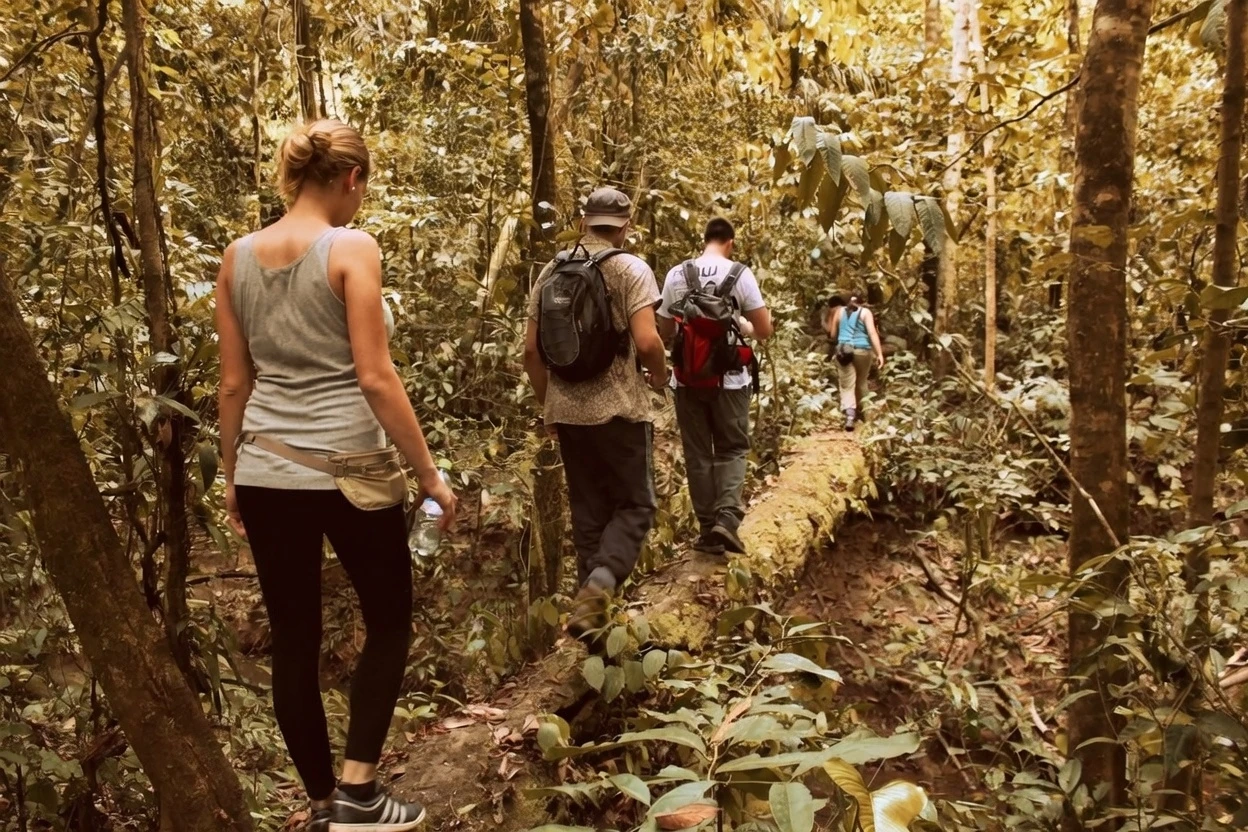
From Rurrenabaque, only 45 minutes by boat upstream, on the right bank is the community lodge of San Miguel del Bala, the newest of the community ecotourism ventures in the area. The advantage of this lodge is precisely its proximity to Rurrenabaque; it can be visited even if you go to the area for the day or if you only have one night to stay. Its offer is varied in terms of activities related to jungle tours with emphasis on birdwatching, monkeys, large animal tracks and plants, and the option to share with members of the San Miguel community, conditions that invite a long stay.
- In San Miguel del Bala you can take walks through different jungle trails, birdwatching, visit a beautiful waterfall and share with the San Miguel del Bala community.
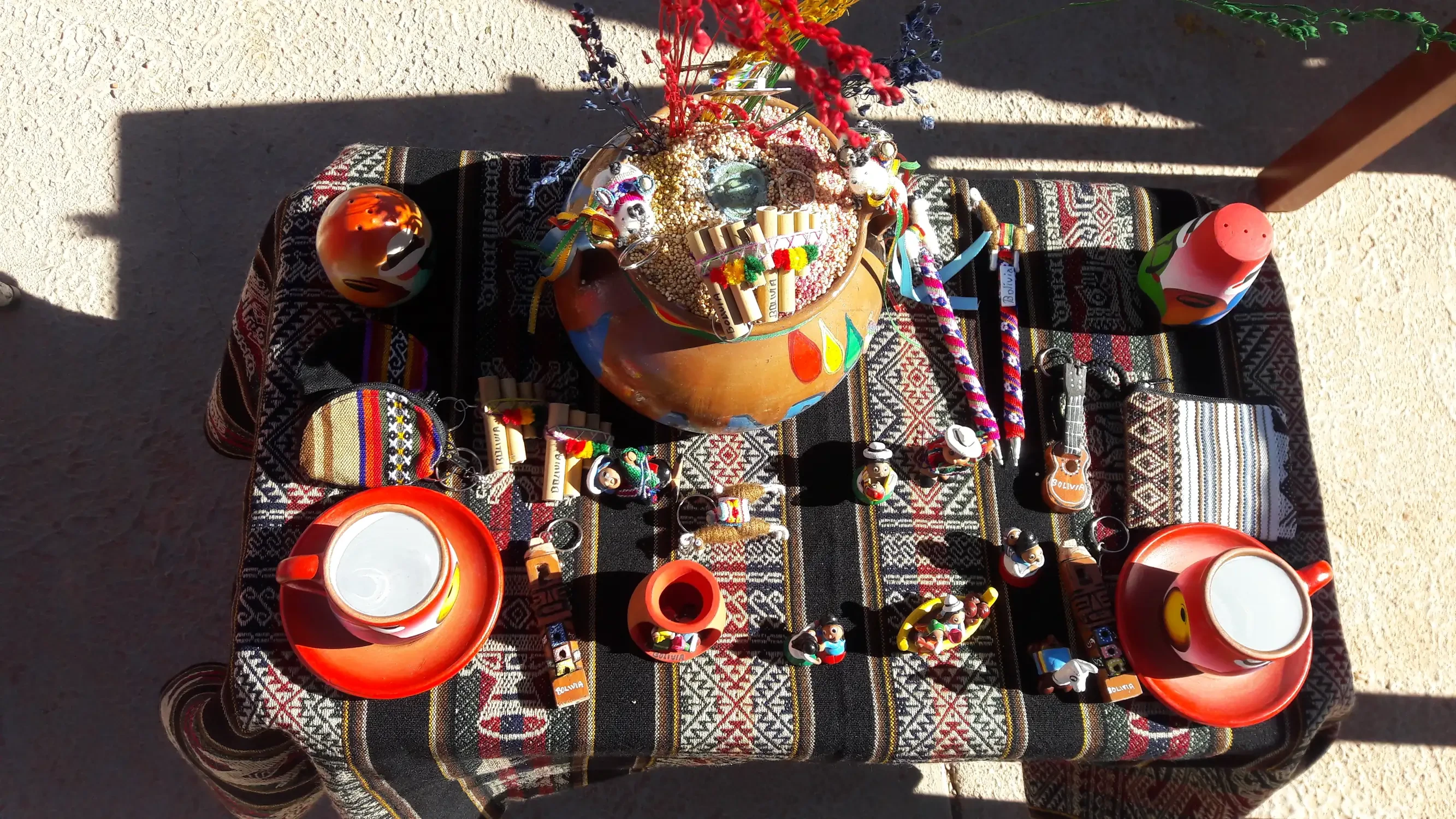
The lodge has seven cabins with private bathroom, hot shower and electric light at night and a couple of cabins with shared bathrooms. It offers an Interpretation Center where social activities, rest, seminars are held; it has hammocks, board games and books of the Tacana culture. There is an exhibition and sale of typical handicrafts. A large and comfortable cabin has been designated as kitchen and dining room; it serves not only the lodge guests, but also visitors who come for the day to San Miguel. The lodge also has a camping area.
- The San Miguel community has been the only one in the entire country to request to be part of a protected area, in this case Madidi; due to its proximity, it shares the characteristics of flora and fauna inside the Park, which allows its guides to carry out interpretive tours with a Tacana vision. San Miguel del Bala offers five different programs that vary in price according to their duration and content for children, groups and special programs.
Uyuni Salt Flat
Salar de Uyuni and E. Abaroa Reserve
TAYKA HOTEL NETWORK
Although the area has been visited by tourists for almost 30 years, the hotel infrastructure was, until very recently, very poor. This situation has been reversed in part thanks to various private investments such as the Tayka Hotels network, which is a mixed venture, meaning that the hotels were built with grant funding and under favorable conditions.
- The communities where the hotels have been erected have established an agreement with the "Prodem" Foundation so that it administers the network for fifteen years and, subsequently, management passes entirely to the community.
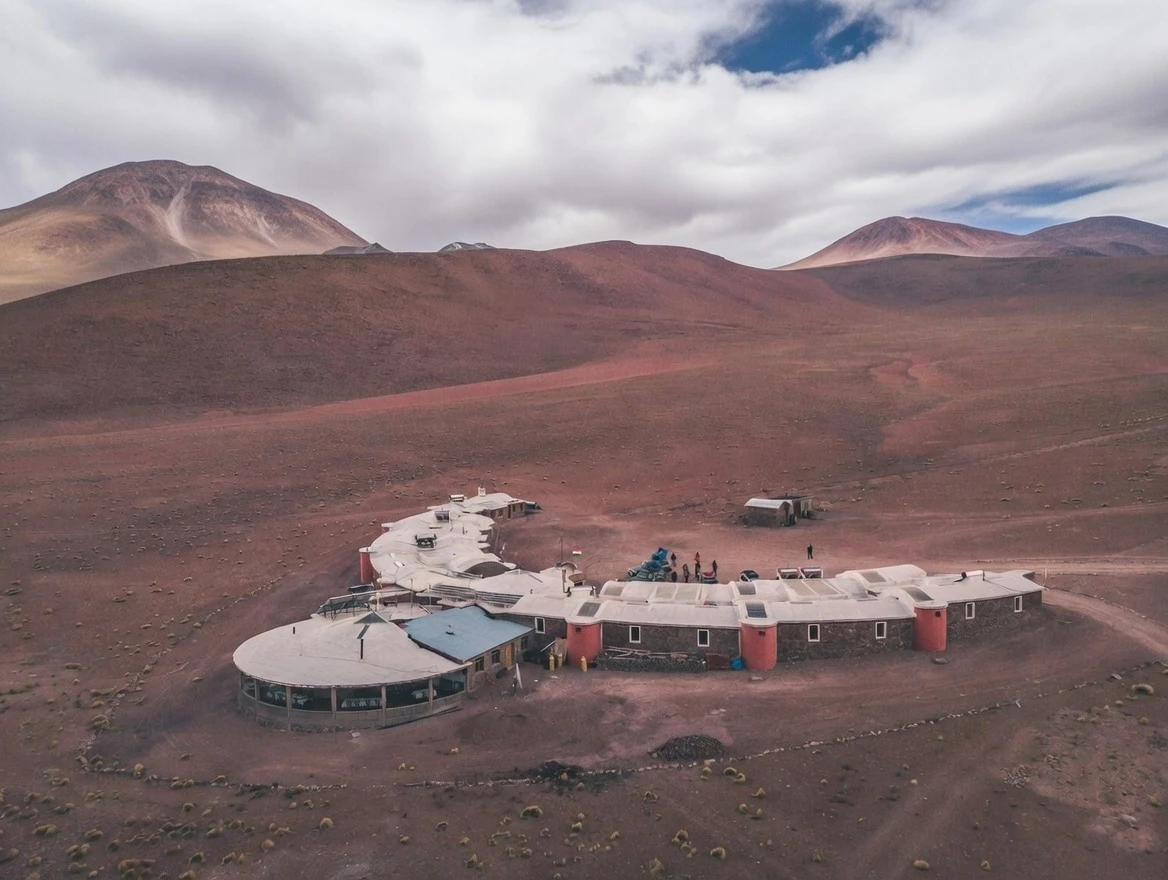
The three hotels in operation are the Salt Hotel, the Stone Hotel, and the Desert Hotel. The first, in the northern part of the salt flat in the town of Tahua, the second to the south of it, in the town of San Pedro de Quemes, and the third located on the edge of the Eduardo Avaroa Reserve, about 40 minutes by car from Laguna Colorada, at a point called Ojo de Perdiz, the first two located at an altitude of 3,700 m above sea level, while the third is at 4,600 m above sea level.
All three have comfortable rooms with private bathroom and hot water. Common areas are spacious and have been architecturally designed according to the aesthetics of the place. The first, following the model of the Salt Hotel, is made of blocks of that material; for the second, stone material and the technique of colonial constructions of the place have been used. Possibly a defect of these hotels is their rooms being too large and difficult to heat, and especially in the winter season, the low temperatures are felt.
It is feasible to enjoy a visit to the three hotels if, leaving at dawn from La Paz, you arrive at a good time at the Salt Hotel in Tahua. For this route, you must use the road that leaves Oruro towards Quillacas and from there to García Mendoza, then take the road that borders the Thunupa volcano on its north face. The second day can be used to visit the Salt Flat in its entirety, including Inca Huasi island and some of the attractions on the slopes of Thunupa, for example the pre-Hispanic cemetery or the so-called Galaxy Cave, and stay overnight at the Stone Hotel. On the following day, you can continue south, visit the Honda, Hedionda, and Cañapa lagoons, and stay overnight at the Desert Hotel, then arrive at Laguna Colorada, the geysers, and Laguna Verde and continue later to San Pedro de Atacama in Chile.
A trip through that area, whether following the mentioned route or returning from Laguna Verde northward, must be done in an all-terrain vehicle. In Uyuni there are a number of companies, small and large, that offer these services. Going through the area in your own car, and without someone who knows the place, is risky; signage is deficient and a GPS does not help, mainly because the choices that can arise at junctions have no relation to direction but to the condition of one path or another where you can fall into traps such as water eyes. Therefore, it is advisable to take local services for the experience and support networks that those who live in the area have.
Eduardo Avaroa Andean Fauna Reserve
With a surface area of approximately 10,000 km² and located in southwestern Bolivia, the Salar de Uyuni is the largest in the world. It is estimated to contain a layer of 6 meters of very pure common salt. At an altitude of 3,700 m above sea level, in the west of Uyuni, it extends as a huge completely flat and white plain of colossal dimensions. The edges of the salt flat have many large inlets and are generally very muddy.
The enormous quantities of salt are rescued primarily in the town of Colchani. First, small hills of salt are piled up for dehydration, then the salt is taken to the town where it is dried, iodine is added, and it is bagged in a rather primitive manner, all within a completely family work.
One of the most visited points within the Salar is the famous Huasi Island or Pescado, so called because it has, from a distance, the shape of a fish. On this promontory there is a dense forest of large-sized cacti.
Laguna Colorada
Another great attraction is Laguna Colorada located within the Eduardo Avaroa Andean Fauna National Reserve, in the Potosí highlands near the border with Chile. The lagoon has a surface area of 60 km² and reaches around 80 cm in depth.
The red color of its waters is due to the presence of certain algae and bacteria that have the characteristic of changing with temperature and at certain hours, being of more intense red when solar radiation is strongest (midday) possibly passing to a purple red. Near the water, borax hills can be seen that seem to be floating in the red waters. Possibly there the greatest concentration of flamingos in South America has nested.
It is unknown how the birds can survive the extreme temperatures of -20 ºC and lower. At an altitude of more than 4,200 m above sea level, three different types of flamingos are found in the lagoon. All can live next to each other because their beaks are different and each type of flamingo feeds on a different type of algae.
Red Desert de Los Lípez
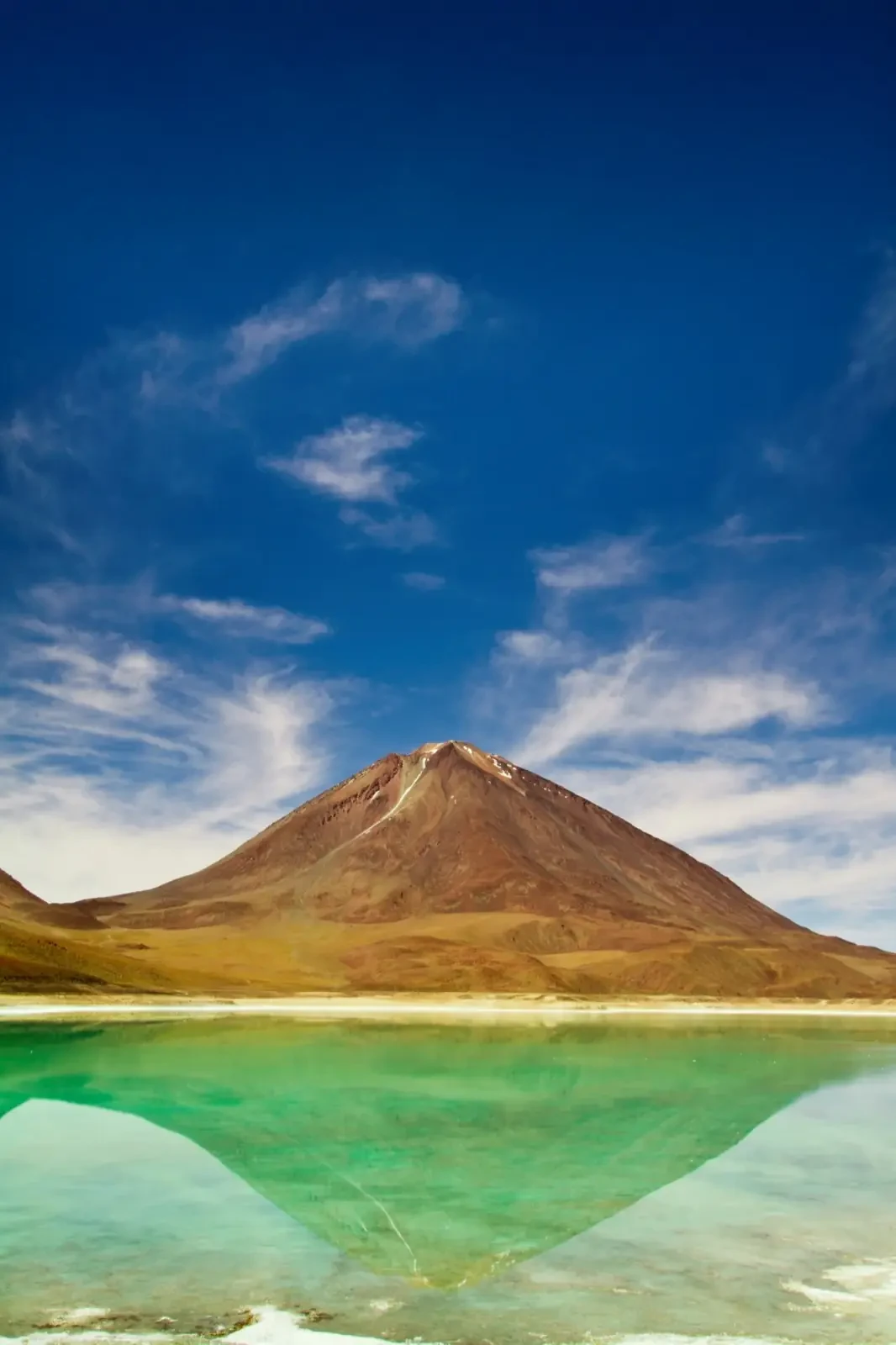
In the last corner of Bolivia, in the Lípez zone, facing the famous Laguna Verde and the peaks of the Licancabur volcano.
- The residents of Quetena Grande have built a mountain lodge that is the only accommodation option in that part of the circuit of lagoons and deserts of Southern Lípez.
Laguna Verde Mountain Lodge
The lodge is also an option for those doing the Lagunas circuit and planning to return to Uyuni. The advantage is that this way you can divide the time it takes for this circuit of approximately 850 km in a more convenient manner, meaning, on the first day from the Salar to San Agustín, or San Juan and stay overnight there, then on the second day you can continue through the Hedionda, Chiarkhota, and Colorada lagoons until Laguna Verde, where you can stay overnight. The following day, the return could be made from Laguna Verde, passing through Polques, Quetena Grande, Quetena Chico, Villa Alota, Culpina K, San Cristóbal until reaching Uyuni.
- Managed by the Quetena Grande Tourism Service Providers, it has double and triple rooms and can accommodate up to 18 people per night. The lodge is ideal for those planning to climb Licancabur; the community members of Quetena offer their services as specialized guides and porters.
Polques Hot Springs
Where visitors can bathe. It has a cafeteria that provides food services upon consultation with administration, in addition to a small sales store (sweets, cookies, soft drinks, etc.). For now, the existing cafeteria rents tables with and without tablecloths to operators who come with their cooks; the location has a public ecological bathroom.
Quetena Chico Community Lodge
During your stay at this lodge you could take advantage of visiting the "Ch'aska Interpretation Center" located in front of the communal lodge, there the visitor will find information organized in several rooms dedicated to different themes: research work carried out by NASA, ecology rooms, biology, medicinal plants, Andean agriculture, geology and mineralogy of the region.
- The Quetena Chico community has built a lodge that has been equipped with all necessary furniture.
This communal lodge has a capacity to receive up to 20 people. It has showers, bathrooms and electricity thanks to a generator that is turned on until 10 p.m. Another service that can be found, upon reservation at the Interpretation Center, is the cafeteria service (breakfast, lunch and dinner), run by women from the community who received training in gastronomy. The capacity of this cafeteria is for 25 people.
Sajama Park
Tomarapi Eco-Lodge
The Tomarapi Community Lodge is one of the jewels within Community Tourism. It is located in the town of Tomarapi in Sajama National Park. From La Paz, the journey to Tomarapi is an extraordinary tour through the Bolivian Altiplano. Those who can afford private transport will enjoy a wide range of cultural, archaeological, and above all, scenic offerings. The route is paved and, in its first stage, is the highway connecting La Paz with Oruro. At kilometer 58 it is advisable to make a cultural stop; this is the town of Calamarca and its church, which contains one of the most important series of colonial paintings in Bolivia: the Archangels of Calamarca.
- The special characteristic of Tomarapi is that the lodge was built more or less following the original plan of the small houses of the place. The community social structure has survived migration, mainly because ties were maintained around tradition and the patron saint festival.
At kilometer 70, in Villa Loza, you can stop at one of the best-stocked sales points, with a restaurant included, that exists on a Bolivian highway. In Patacamaya, kilometer 101 is where you turn off taking the road toward Arica, Chile. On the way, around kilometer 150, you begin to encounter a series of tombs in the shape of small towers, the so-called "chullpares." These will be seen along the highway for a few kilometers. They are funerary constructions made of adobe and mostly correspond to the 12th and 13th centuries AD.
Finally, you advance to kilometer 268, and there you turn right; twelve kilometers later you arrive at the town of Sajama, already inside the National Park. In Sajama you must register in the park visitor registry, pay the sum of 100 bolivianos per person, then continue on your way. With a little luck you will encounter vicuñas; on the way llamas and some alpacas have already made their appearance; 18 kilometers beyond the town of Sajama, we arrive at Tomarapi, the old hamlet, today dominated only by a beautiful little church and the lodge.
- 80% of that small community, composed of just thirty families, participates in the place administration.
There is no doubt that spending the night in Tomarapi, having a rich menu with llama meat in the dining room, with a bonfire in the background, is the culmination of one of the most beautiful days someone can have on the non-lake Altiplano. Tomarapi is also a great alternative to begin an ascent to the mountain. Nearby there are very pleasant hot springs, whose infrastructure, changing rooms, bathrooms, and a small snack stand are in operation: Wayna Sajama.
Sajama National Park
It owes its name to a giant guest who fraternizes with the clouds, and who rests deeply and calmly despite the noisy voices of birds and other animals that roam this charming place. We are talking about the Sajama volcano, the highest and most imposing peak in Bolivia at 6,542 m a.s.l., undoubtedly the greatest attraction of the Park, because its figure seduces and enchants any visitor who ventures into this wonder of nature.
- Its natural and cultural values make this area one of the most important for conservation in Bolivia, where there is an extension of queñua forests, the tree that grows at the highest altitude in the world (5,200 m a.s.l.).
So that nature would not lose one of its favorite children, the Bolivian State decided to protect it by creating, in 1939, a national park, with an extension of 100,223 hectares, located in the Sajama Province of the Oruro department.
- The park population resides in the small towns of Sajama and Caripe, located at the foot of Sajama, and in numerous ranches where livestock is grazed on communal lands.
Lake Titicaca
Isla Pariti
Where a museum is located with fine ceramic pieces from the Tiwanaku culture; the most recognized piece is named "The Lord of the Ducks," distinguished by its perfection and artistic quality compared to pieces of worldwide historical value.
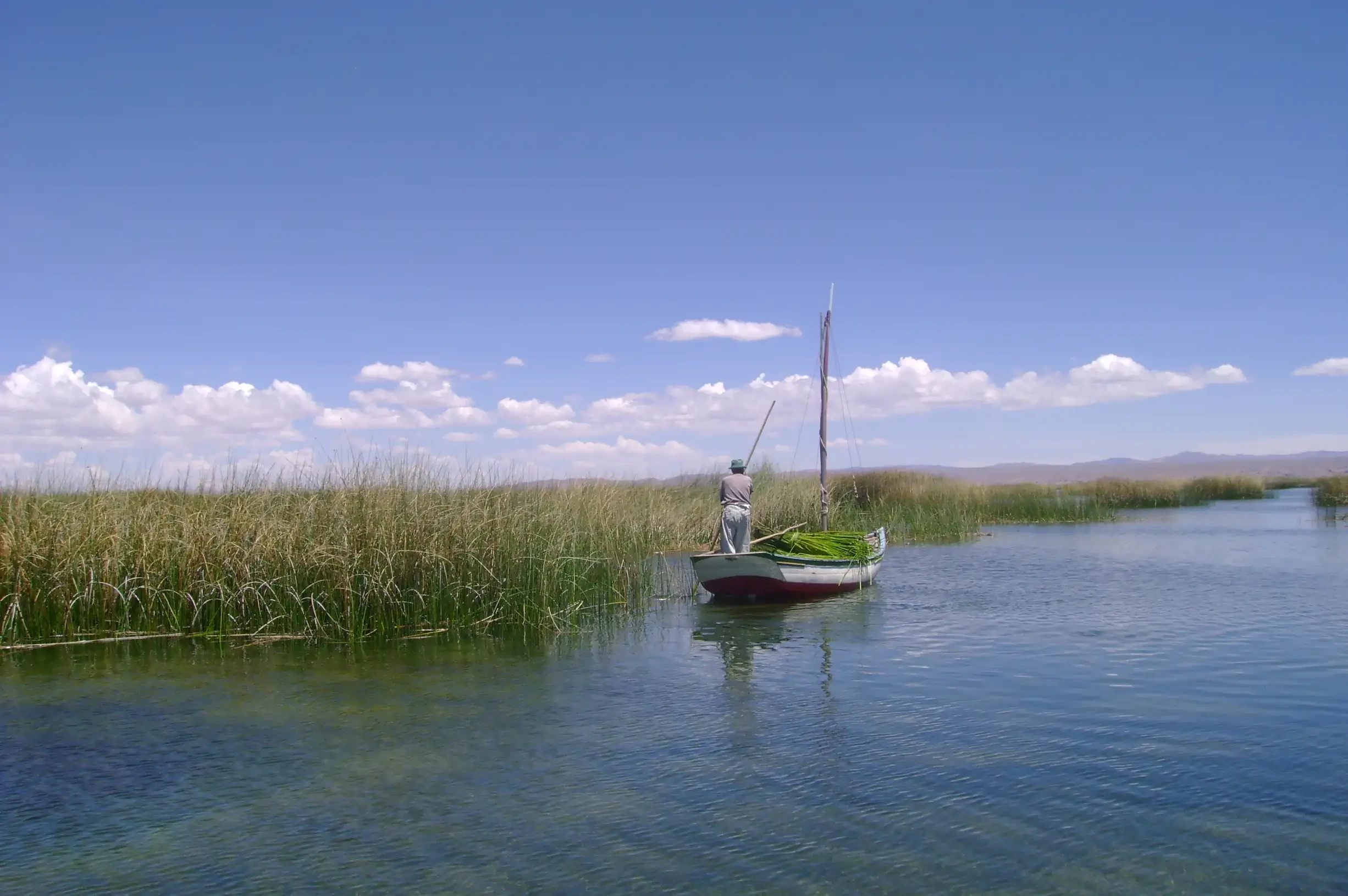
The tour begins in the town of Huatajata, after 2 hours of travel from the city of La Paz. From Huatajata we embark on a local boat to travel for 1 hour through the "Small Lake" that is part of Lake Titicaca. Visit to Isla Pariti and its museum, which features valuable remains left on the island, such as utensils and tools. Research has determined that this site was initially occupied by a civilization dedicated to agriculture, fishing, pottery, and the exploitation of natural resources from Lake Titicaca.
Sampaya
It is one of the most authentic and picturesque towns on the Copacabana Peninsula for having preserved the architecture and ancestral stone construction techniques. From its slopes you can see the vastness of the lake, the Isla de la Luna, and the Royal Cordillera, especially the massif composed of the Nevados Illampu and Ancohuma. This idyllic place also has the advantage of being very close to Copacabana, no more than 12 kilometers away, and having a road that is passable year-round.
- Sampaya offers the visitor the unique opportunity to live and interact with an indigenous community of the Andes. Through its Visitor Center and its two guided trekking trails led by local guides, it offers the possibility of understanding the Aymara worldview, sharing rites and traditions, and experiencing the daily life of the community.
Those who visit Sampaya can do so on foot via the route from Copacabana to Yampupata, a path that for the most part runs along the lakeshore and takes three hours. This route, while providing picturesque views of the lake and the Cordillera, will allow you to gradually acclimate to the heights of the Altiplano region.
- Additionally, this community venture has a small lodge that can accommodate up to eight people with all comforts, a restaurant for 24 people, and an artisan center.
Visitors have the opportunity to take tours between one and two days. Sampaya is a fantastic alternative for those who wish to have a community experiential cultural experience on Lake Titicaca.
Apolobamba Mountain Range
Pacha Trek
The product is sold by travel agencies with private car transport from La Paz and from Charazani to La Paz, including one overnight stay in Charazani and three in the following communities: Qutapampa, Kaluto, and Chacapari. There is also the possibility of taking the bus to Pelechuco and staying in Qutapampa to start the trek and finish it in Charazani, from where you will take the return bus to La Paz.
- Pacha Trek offers a different experience with pleasant walks and stays in traditional communities that make up the "Walking with the Kallawayas" route, with tours through mystical Andean landscapes conducted by local guides who present their Aymara and Quechua cultures. It directly involves three communities in the Apolobamba area.
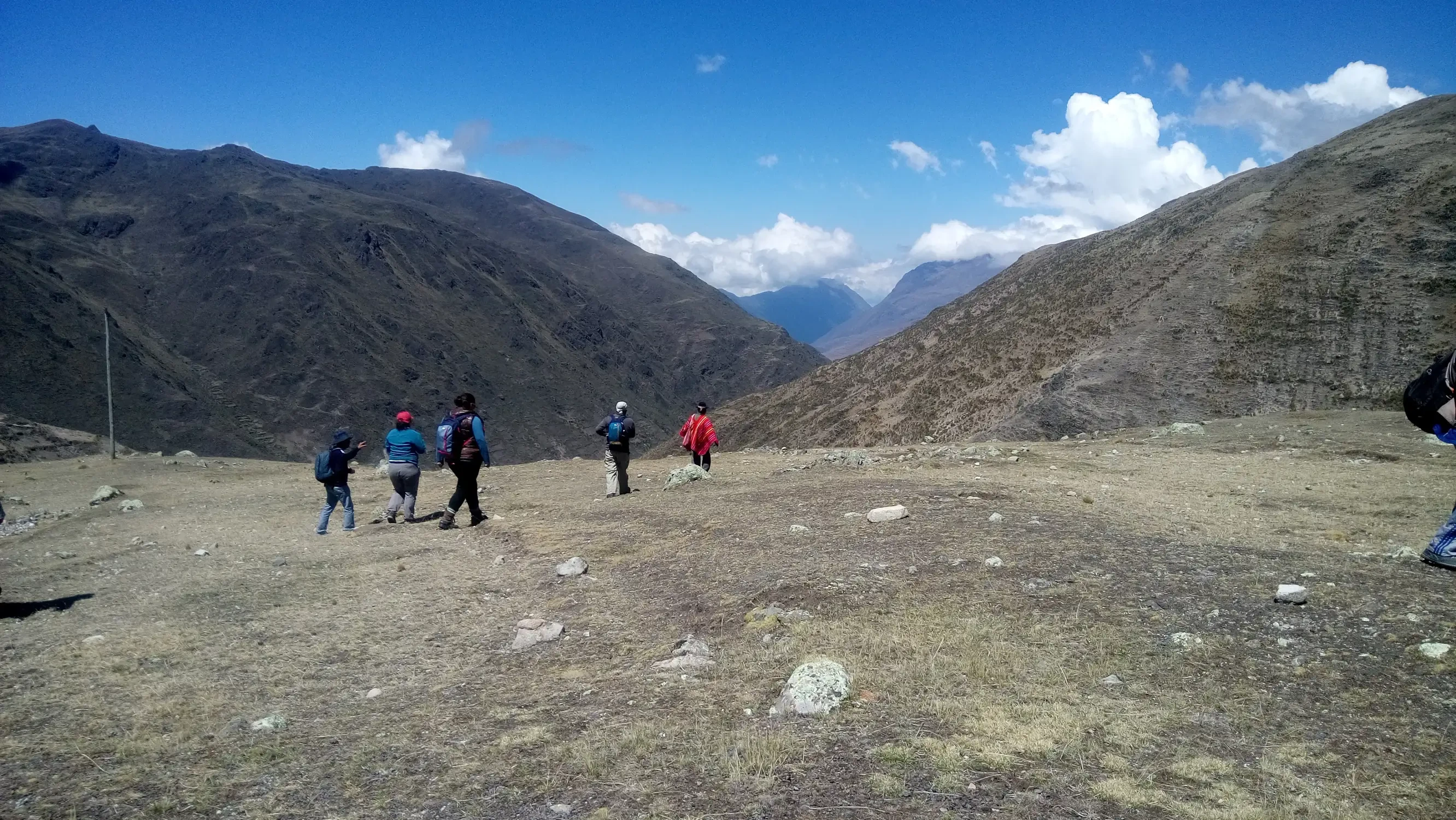
This route involves trekking on high-altitude trails and overnight stays three times above 4,000 meters, but undoubtedly it is the product that brings tourists closest to community life, especially the high-altitude herder communities dedicated to raising llamas and alpacas. The lodges are very simple. It is suggested to bring a sleeping bag because bed hygiene is not optimal, although food is included in the package, it is also advisable to bring additional provisions.
- The Kallawaya culture is an ethnic group in Bolivia that practices ancestral medicine with local rites and ceremonies, recognized by UNESCO as Intangible Oral Heritage of Humanity.
Apolobamba
The Apolobamba Integrated Management Natural Area (IMNA) covers an area of 483,743 hectares. It is located in the northwest of the La Paz department and constitutes a mosaic of units that include representative samples of ecoregions, communities, and flora and fauna species of singular importance.
- Apolobamba was created to protect high-Andean ecosystems and one of the largest vicuña populations in the country.
Its landscape is characterized by a marked altitudinal gradient that includes both high-Andean environments, puna, and humid mountain forest of the Yungas. The area is part of the Vilcabamba-Amboró binational biological corridor, considered the most diverse hotspot in the world. More than 800 plant species have been recorded, with estimates that they could reach 1,800 incorporating probable species from unrevealed sites. 296 vertebrate species have been listed, among which several threatened species stand out such as the vicuña, spectacled bear or jucumari, and endemics restricted to the protected area.
Ulla-Ulla National Reserve
The Apolobamba Cordillera houses the Ulla-Ulla National Reserve. From the Reserve it is frequent to see the condor, the largest flying bird in the world, and its abundant vegetation attracts llamas, alpacas, guanacos, and the largest population of vicuñas in Bolivia. Likewise, tourists will find wild species such as the puma, taruca, Andean bear, hullata, deer, among others. The reserve offers endless possibilities for practicing ecotourism and various adventure sports such as sport fishing, mountaineering, hiking, and others.
- More than 12,000 Aymara descendants gathered in 35 communities inhabit the area. They preserve ancestral customs and traditions and are mainly dedicated to raising camelid livestock (alpacas and llamas) and sheep.
To reach this destination, approximately 360 kilometers are traveled, and undoubtedly the recommended way to do it is in a private car with double traction suitable for all terrain. The journey, at moderate speed, takes about seven hours, but one must also consider the countless photographic stops that will be made along the way. From the city of La Paz, take the route toward Lake Titicaca, upon arriving at Huarina take the road leading to Achacachi and continue, passing through Ancoraimes and Carabuco, until Escoma (km 190), the place where the asphalt ends.
Along the way it is essential to visit the church of Carabuco, which has one of the most important fresco decorations in South America. This church was built by the indigenous prince of the area, the chief Siñani, whose descendants still play an important role in current Bolivian politics.
Tripadvisor


Request a quote
Meet local communities
From 1 to 5 days