




4w4 adventure across salt flats and colorful deserts
About Uyuni
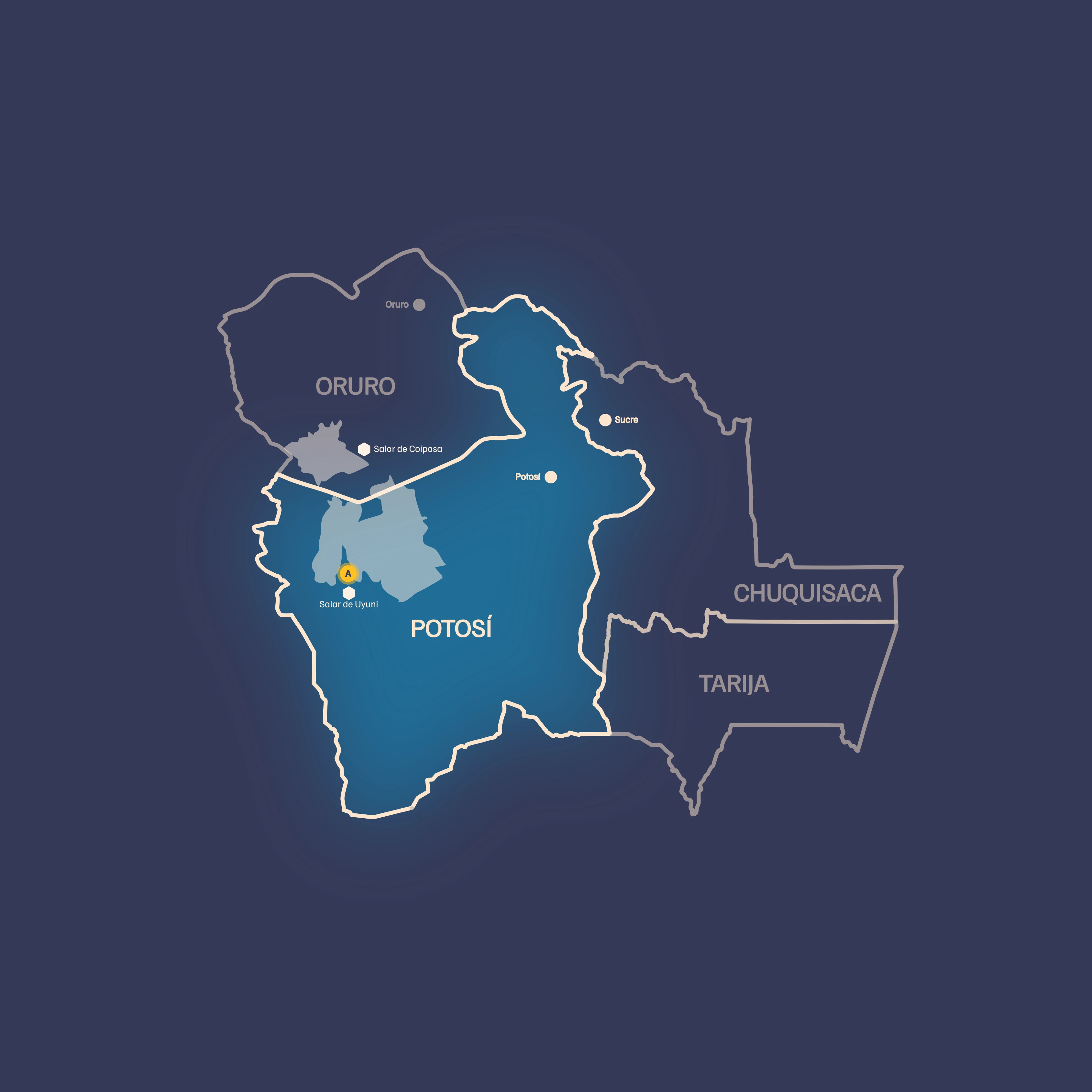
The town of Uyuni is a small settlement located in the Potosí province, in western Bolivia. It sits at an altitude similar to La Paz, approximately 3 700 m above sea level. Like La Paz, Uyuni receives tourists year‑round, but its area is about 25 km² (≈ 5 km × 5 km), making it much more compact than the urban zone of La Paz.
Despite its modest size, Uyuni has cafés, restaurants, travel agencies and hotels spread throughout the town, serving as a lodging base for visitors who come to explore the Uyuni Salt Flats.
About 15 minutes by car from downtown Uyuni you can see the remains of abandoned, rusted trains. Those trains once departed from Uyuni toward the Chilean region of Antofagasta, carrying minerals extracted from inland mines to coastal ports. A few minutes further on you’ll find Colchani, a small community on the edge of the Uyuni Salt Flat, known for its artisans and salt producers. Its residents preserve ancestral traditions of salt extraction and refining. It is the main gateway to the salt flat and a key point for visitors.
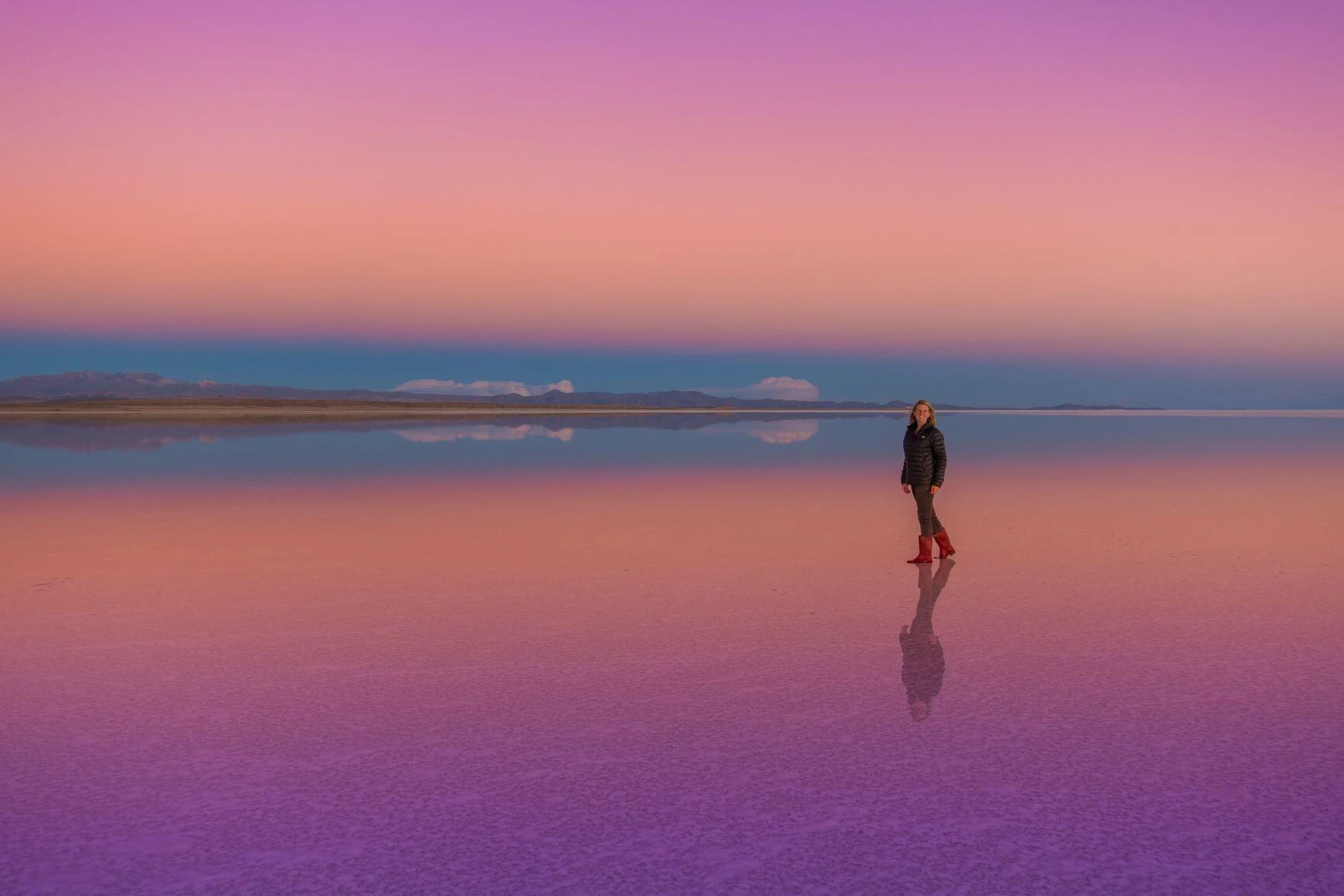
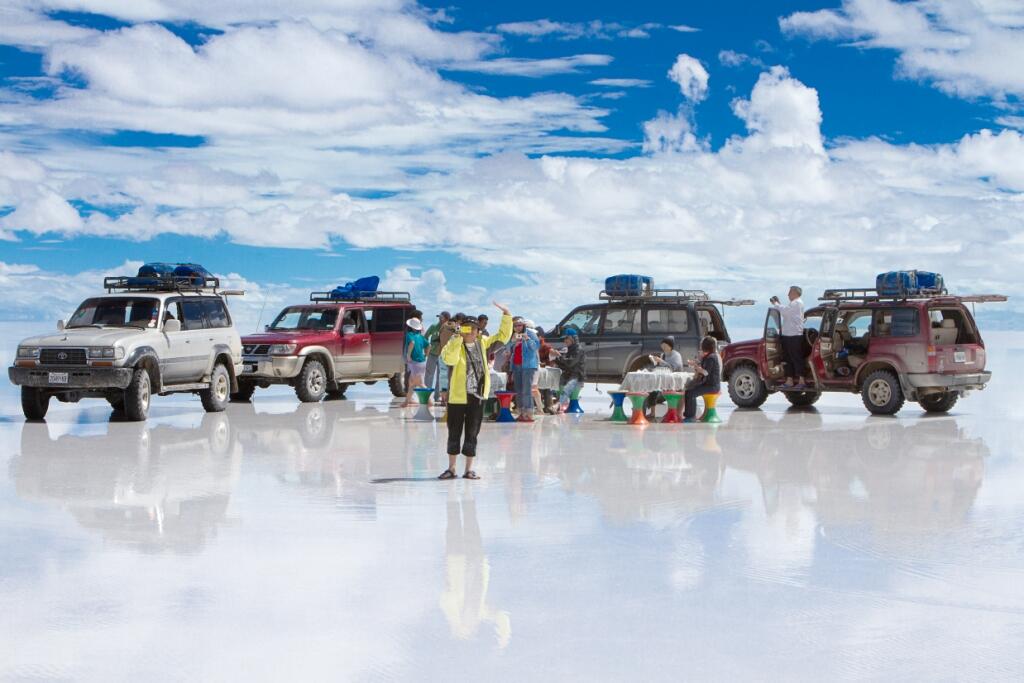
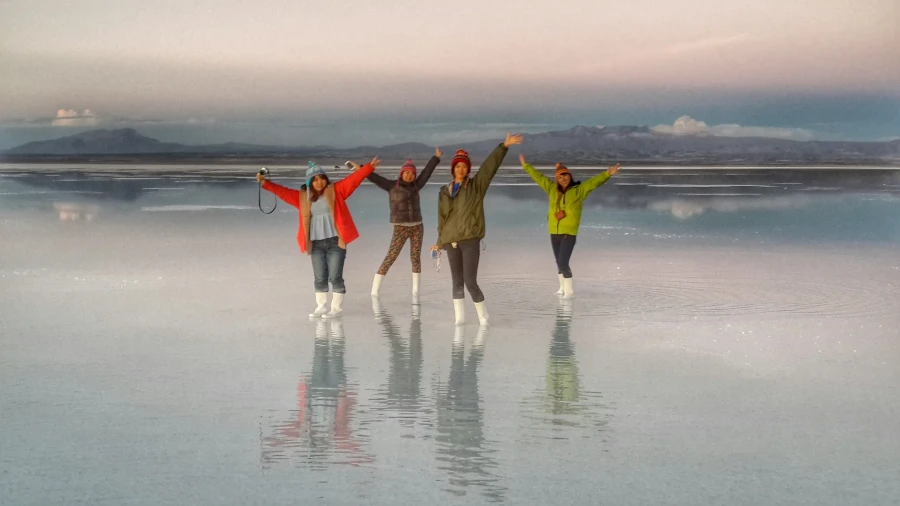
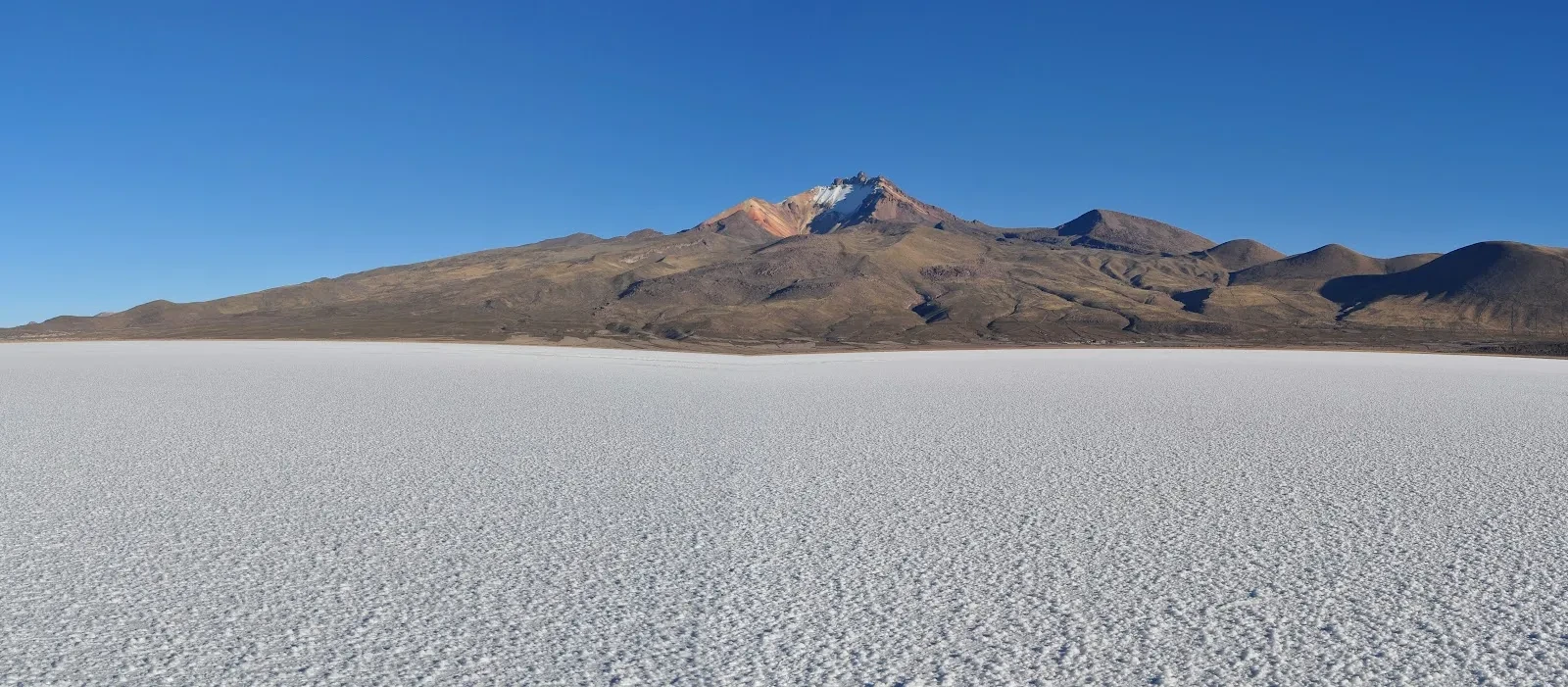
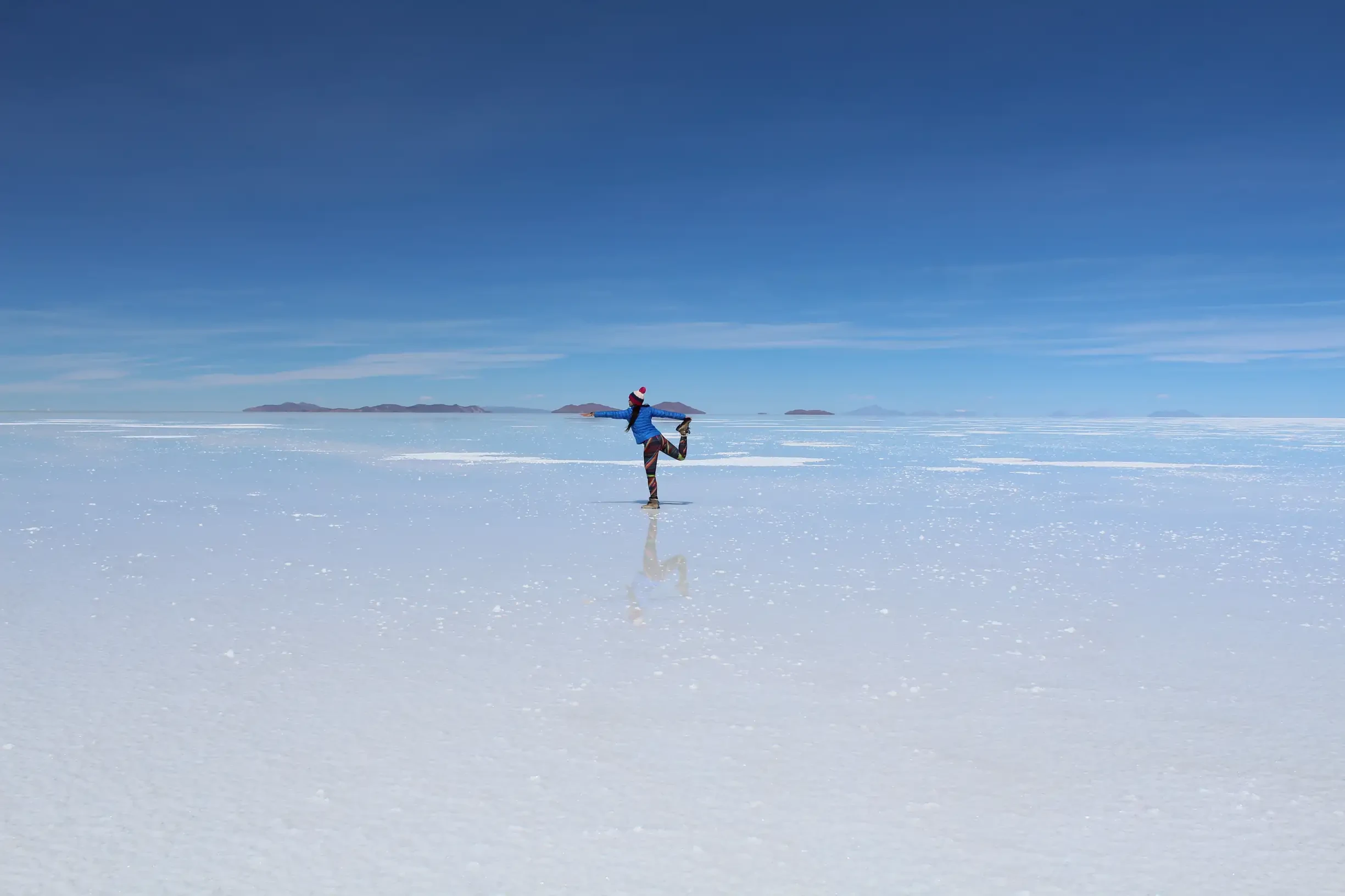
The Uyuni Salt Flats, listed as “a landscape you must visit at least once in a lifetime.” Its surface is extremely flat, with a height variation of less than 50 cm. For that reason, during the rainy season water pools on the salt flat’s surface and creates a gigantic mirror that reflects the sky. That spectacular view, known as “the sky‑mirror of the Uyuni Salt Flats,” quickly spread among travelers and became famous worldwide.
Itinerary
Day 1
Uyuni ➔ Salar de Uyuni ➔ Tunupa Volcano ➔ Tahua Village
- At 11:00 am we will pick up guests at their hotel in the city of Uyuni.
- The first place we will visit is the popularly known “Train Cemetery.”
- Next we will go to the town of Colchani, located at the entrance of the Salar de Uyuni, and then to the Hotel de Sal.
- After leaving the Hotel de Sal, inside the Salar de Uyuni we will reach the “water eyes,” open holes from which groundwater springs; looking into the hole reveals the salt layers that show the formation process of the salar.
- Then we will move to Incahuasi Island, situated in the centre of the Salar. There grow huge cacti that can reach a height of 12 m! Incahuasi Island formed when a prehistoric lake (Lake Minchín) dried up; climate change caused the water to evaporate, leaving volcanic rock hills that became today’s “islands” of the salar, such as Incahuasi.
- To the north of the Salar we will visit the Coquesa Museum, which displays several pre‑Columbian mummies; clothing and ornaments from the period can also be seen, allowing a deeper insight into the ancient culture of the region.
- After leaving the museum we will head to Tunupa Volcano. From the viewpoint at the foot of the volcano you can admire the majestic landscape surrounding the Salar de Uyuni.
- Before night falls we will travel to the village of Tahua. Upon arrival we will accompany you to the hotel where you will spend the night (overnight stay).
Day 2
Tahua Village ➔ Smaller Lagoons ➔ Siloli Desert
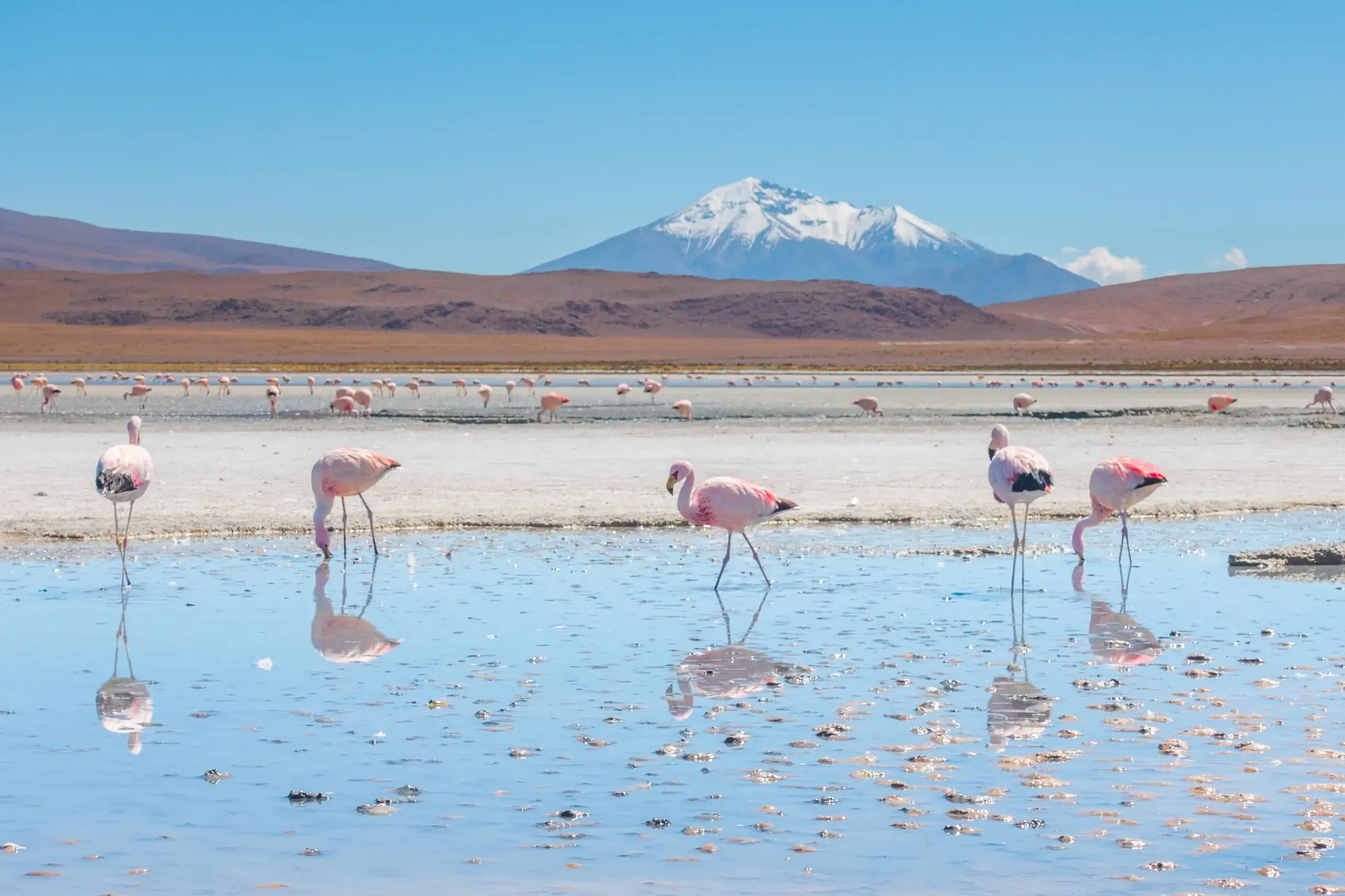
- We leave the village of Tahua and head to Ollagüe Volcano, located in the Lípez area on the border with Chile; its current volcanic activity can be seen from a distance. Along the way we will stop at the “Jewels of the Andes” area, where several lagoons with beautiful scenery are concentrated. The lagoons there are: Laguna Cañapa, Laguna Hedionda, Laguna Chiarcota and Laguna Honda. These water bodies are ideal for spotting flamingos and various bird species.
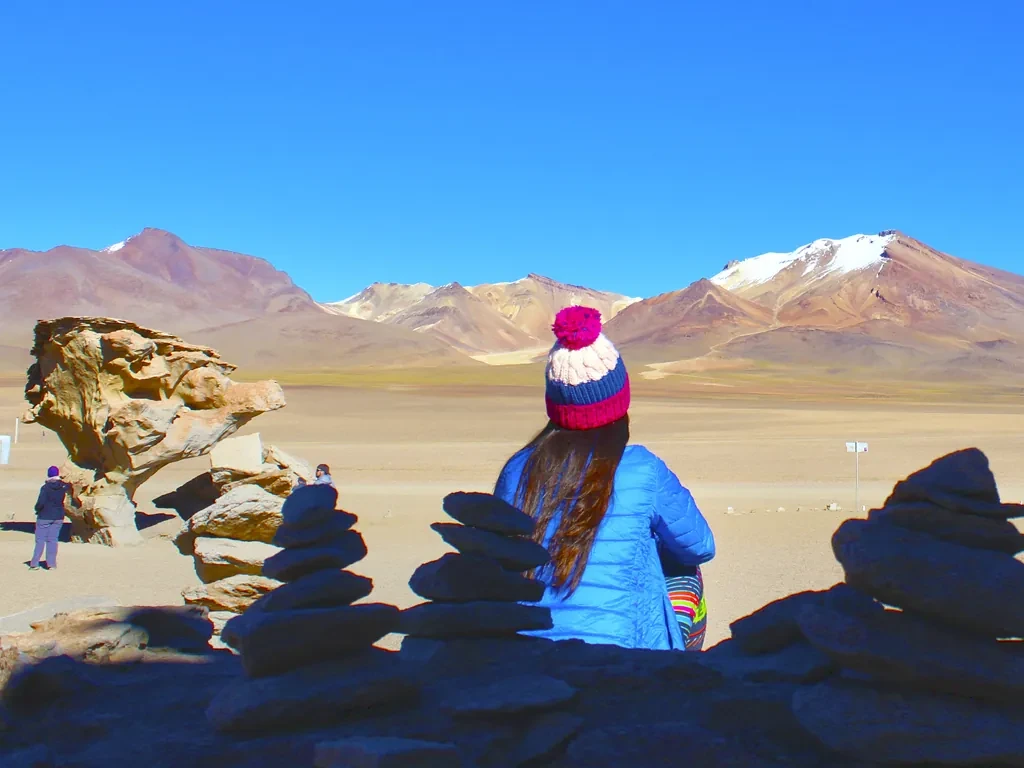
- The final destination of the second day is the Siloli Desert. From morning to afternoon we move from the white landscape of the Salar de Uyuni to a completely desert environment. The volcanic rocks of the Siloli Desert display curious shapes created by natural erosion, making them a very popular photographic attraction among visitors. Taking photos with these rock formations as a backdrop, with their orange and reddish tones, yields spectacular images. In the Siloli Desert we will arrive at the hotel to spend the night.
Day 3
Siloli Desert ➔ Green Lagoon and Red Lagoon ➔ City of Uyuni
At 6:30 am, we get ready for the longest day of the circuit, surrounded by the beautiful and desert landscape of the Eduardo Avaroa Andean Fauna Reserve.
- The first stop of the third day is the famous rock formation called the “Stone Tree,” still in the Siloli Desert, we continue our journey toward Red Lagoon; in this lagoon you can observe the three types of flamingos that exist in the Andean region:
- Andean flamingo (Phoenicoparrus andinus)
- James’s flamingo, also called large flamingo (Phoenicoparrus jamesi)
- Chilean flamingo (Phoenicopterus chilensis)
- We keep going in a 4×4 to the area called “Morning Sun,” a zone with intense geothermal activity: steam and hot gases rise from the ground, and geysers and thermal mud pools are present. Because of this activity there are also hot springs suitable for bathing; take the chance to relax.
- Afterwards we will drive through the reserve and enjoy a panoramic view of the “Dalí Desert,” with rocks that resemble the work of the great surrealist painter, and we will also visit Green Lagoon at the foot of Licancabur Volcano, whose waters turn green because of the minerals and copper in the basin.
- From this point, very close to the border with neighboring Chile, we start our return to Uyuni; on the way we will stop at the Valley of Rocks, where huge volcanic rock formations impress visitors with heights ranging from 5 to 15 meters.
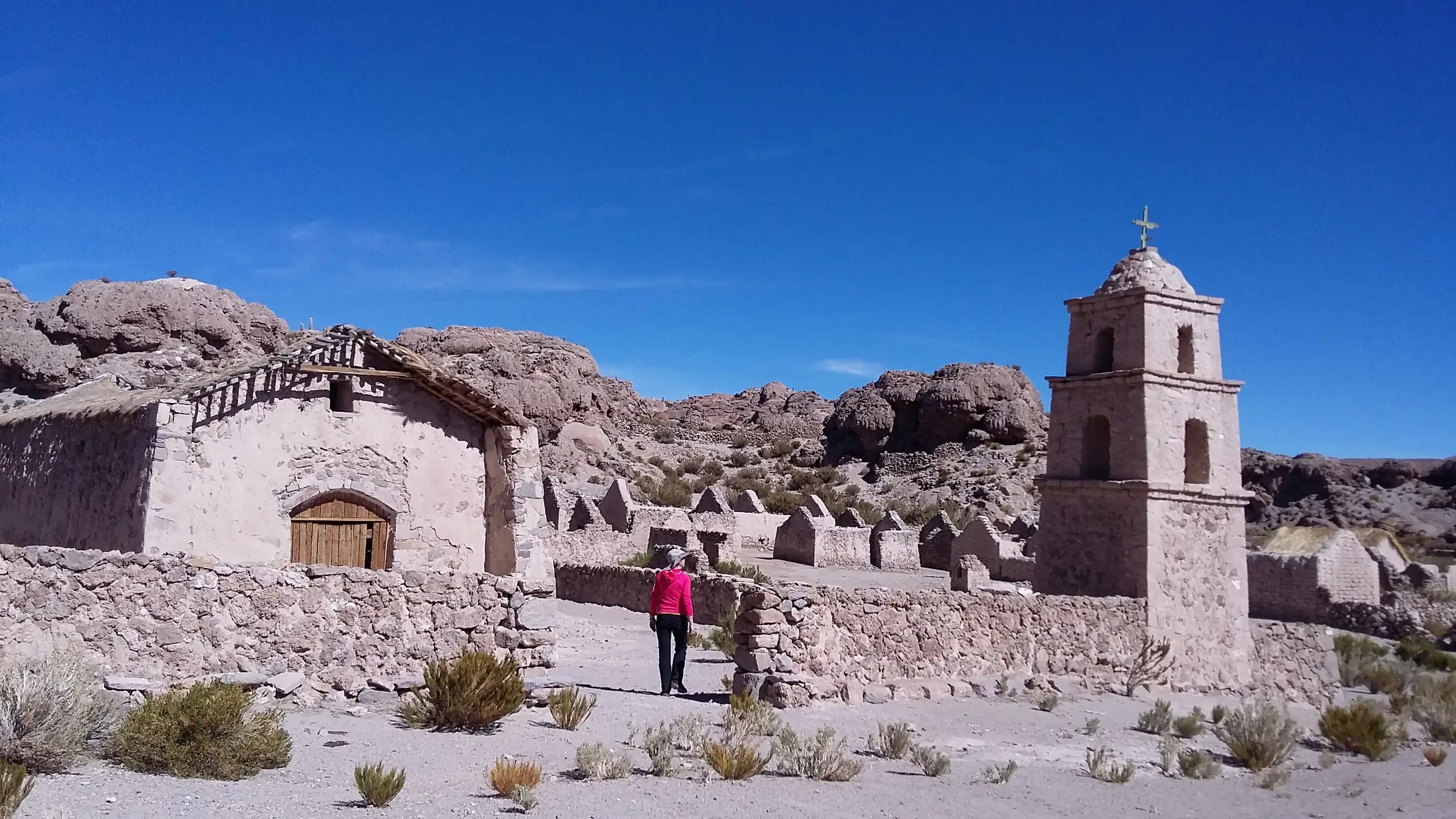
- Near Uyuni we will make our last stop in the town of San Cristóbal; this town is famous for its proximity to the San Cristóbal Mine, currently extracting silver, lead and zinc, and for the fact that the whole community was relocated almost 30 years ago; its colonial‑period church was moved stone by stone to its new location.
- After a short rest, we will arrive in the city of Uyuni. We expect to reach Uyuni around 18:30.
Important notes
Availability:
✓ Tours are available every day of the week.
➔ For tours scheduled during the rainy season (December – March), please check with Late Bolivia to confirm availability and conditions.
Start and end of the tour:
✓ The itinerary starts and ends in the city of Uyuni.
➔ Contact us if you want to know how to get to Uyuni from your location. This transfer to Uyuni is not included in the package.
Important data:
✓ Altitude variation: from 3 665 m a.s.l. in Uyuni to 4 870 m in the Siloli Desert.
Health information:
✓ The sunlight reflected off the bright salt flat is very intense, so sunglasses are recommended.
➔ Be prepared for sudden temperature changes (low humidity and dry climate). Warm clothing is advised (hats, gloves, jackets, etc.).
Includes
Not Included
Tripadvisor


Request a quote
Tours at the Uyuni Salt Flat and Colored Lagoons
From 1 to 5 days