






Travel Information of the Bolivian Valleys
About the Bolivian Valleys
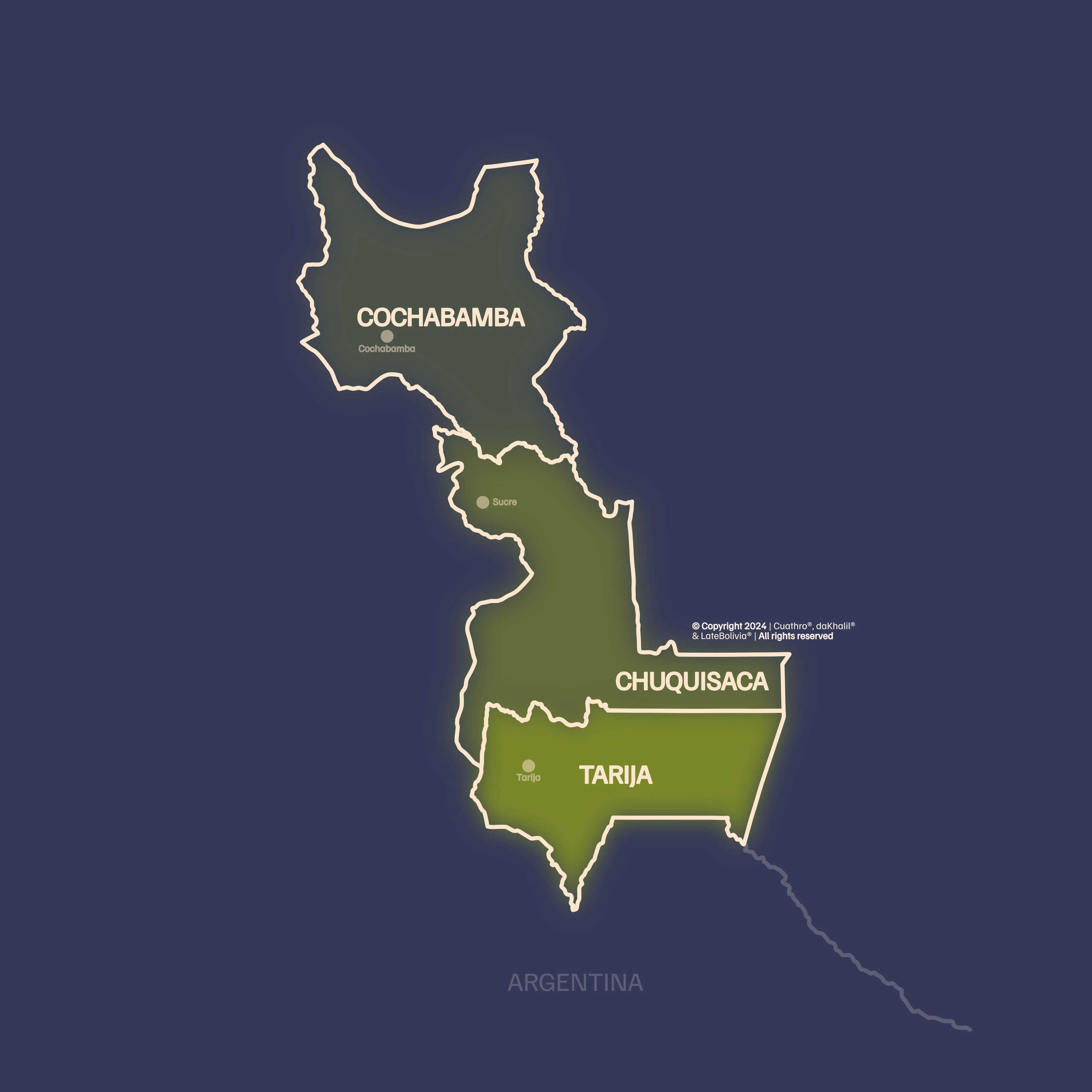
The inter-Andean valleys of Bolivia form a continuous strip that crosses the departments of Chuquisaca, Tarija, and Cochabamba, situated between the Altiplano plateau in the west and the tropical plains in the east. With an average altitude ranging between 1,800 and 2,800 meters above sea level, these valleys feature a temperate-subtropical climate: warm summers with precipitation concentrated in the summer season and dry winters, earning them the designation of the "region of perpetual spring."
The combination of fertile alluvial soils, a topography of basins and plains, and the availability of water resources (rivers such as the Pilcomayo, the Choqueyapu, and tributaries of the Amazon basin) favors intensive and diversified agriculture; corn, wheat, quinoa, soy, mountain fruits, citrus fruits, and, particularly in Tarija, internationally renowned vineyards are grown there. This productivity makes the valleys the country's main granary, contributing more than 30% of the national food production.
Their strategic location serves as a transport corridor linking the Altiplano with the Amazon and the Gran Chaco, facilitating commercial and cultural exchange between the different Bolivian regions. Together, the valleys of Sucre, Tarija, and Cochabamba represent the economic, demographic, and cultural axis of Bolivia, combining favorable climatic conditions, agricultural wealth, and a population density that distinguishes them from the rest of the national territory.
Capital Cities
Sucre
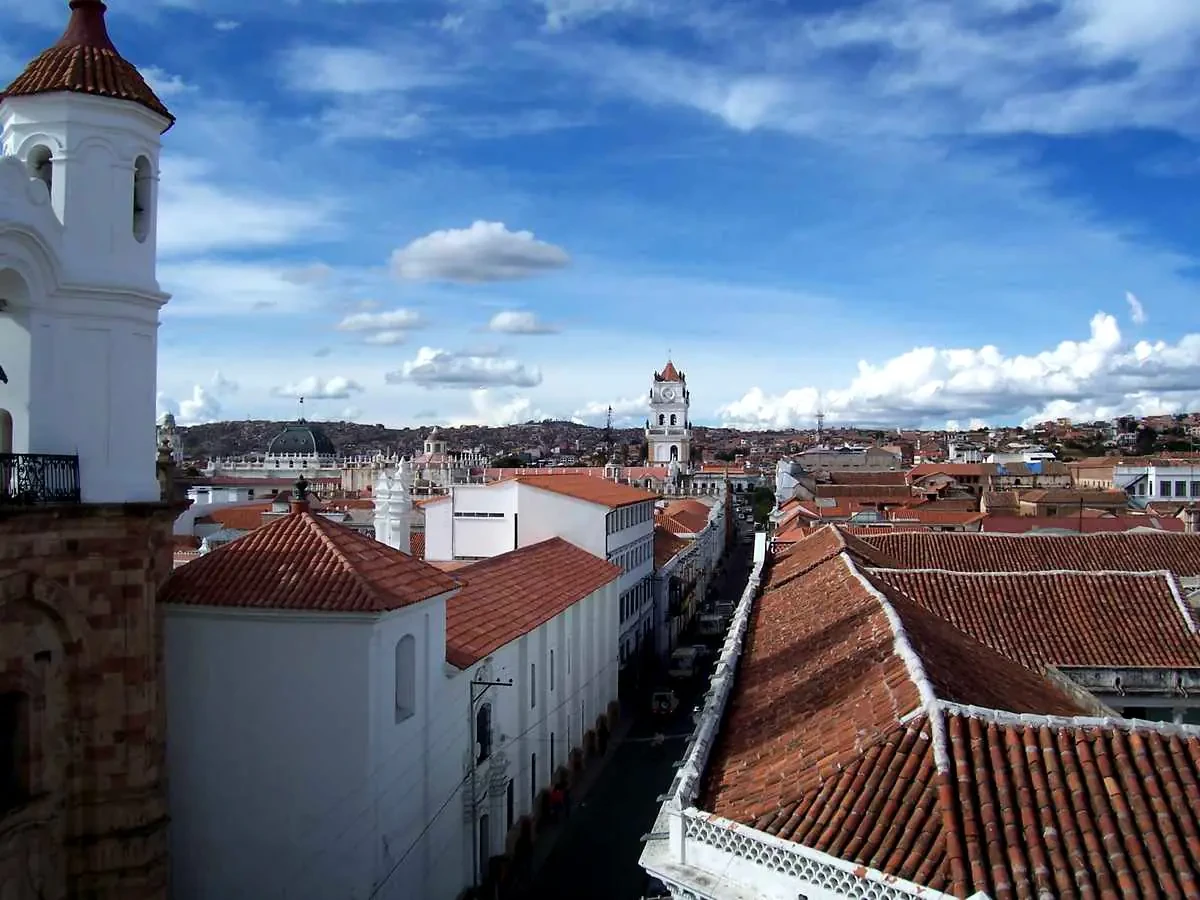
It is the constitutional capital of Bolivia and the capital of the department of Chuquisaca. The city is located in the south-central zone of the country and rests at an altitude of 2,750 m asl. It is also known as "The City of Four Names": Charcas, Villa de Oropeza, La Plata, and Sucre. Since colonial times, Sucre has appeared as a typically Spanish city; its narrow downtown streets are organized in blocks, reflecting Andalusian culture, which is also evident in the large mansions and numerous convents and churches of the city.
Until the 18th century, Sucre was the judicial, religious, and cultural center of the entire colonial region. In 1839, already in the republican era, after the city was named capital of Bolivia, it was renamed in honor of the independence leader Antonio José de Sucre. In 1898, the seat of the Bolivian government moved to La Paz after a civil war.
Sucre is listed as a UNESCO World Cultural Heritage site and attracts many foreign visitors each year thanks to its well-preserved center with buildings from the 18th and 19th centuries. Tourist Attractions of the city of Sucre: Casa de la Libertad, La Recoleta Museum, El Palacio de la Glorieta, the local cemetery, the Cal Orck'o Cretaceous Park, the ASUR Indigenous Textile Museum.
In the surroundings, it presents beautiful landscapes that allow walks and hikes in contact with nature, local cultures (Tarabuco, Jalq'a), and sites of archaeological/paleontological importance such as: Cordillera de los Frailes, Maragua, Tarabuco, Potolo, Chaunaca, Chataquilla.
Tarija
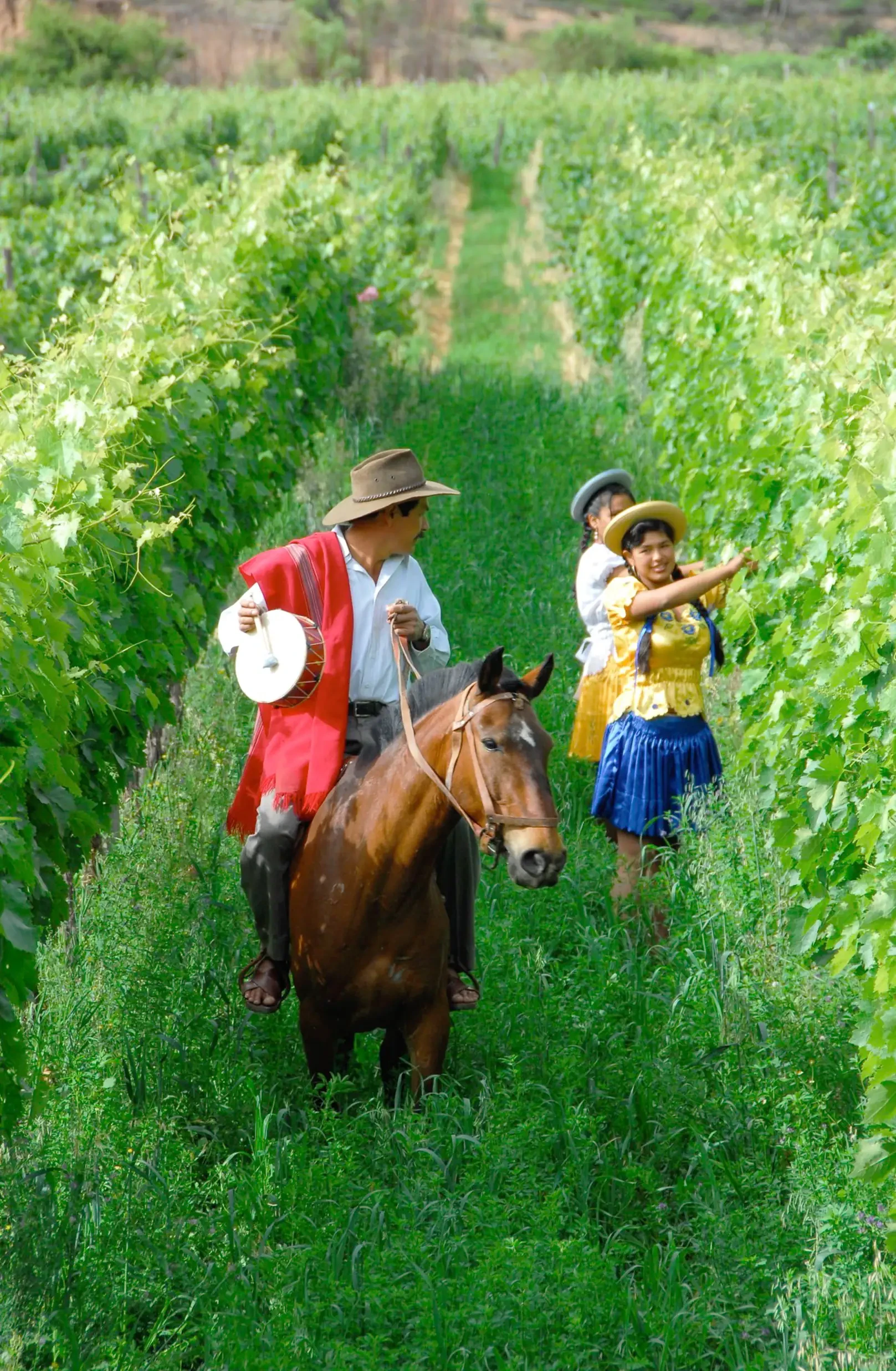
It is a city in the south of the country with an approximate population of 200,000 inhabitants; this city is surrounded by beautiful natural landscapes, where fishing activities and tours through the country's largest vineyards can be carried out. Tourist Attractions: Paleontological, Archaeological, and Historical Museum, Church of San Francisco, Metropolitan Cathedral, La Casa Dorada. Tarija is a special setting to enjoy and be surprised by the grapes and wines produced at an altitude superior to 1,700 m asl, which are part of the High Altitude Wine and Singani Route, which includes visits to vineyards, wineries, and natural and cultural attractions of the Tarija valley.
In the surroundings of the city is the Concepción Valley, a town of 2,500 inhabitants, offering its visitors wine fields and vineyards, natural swimming spots, a variety of high-altitude wines and singanis (made with raw materials produced at more than 1,700 m asl); it is located just 25 minutes from the city of Tarija. The Chapaca Harvest Festival is held here, where the grape harvest represents the most important moment for every viticulturist as it is the culmination of a year's dedication to grape cultivation; in the days prior to the Harvest, the Encounter "Art and Wine" takes place, a space that brings together artists from various disciplines for 10 days, where the main square of the Concepción Valley becomes the stage for plastic artists of painting and sculpture to create their works sharing with the population and visitors.
Cochabamba
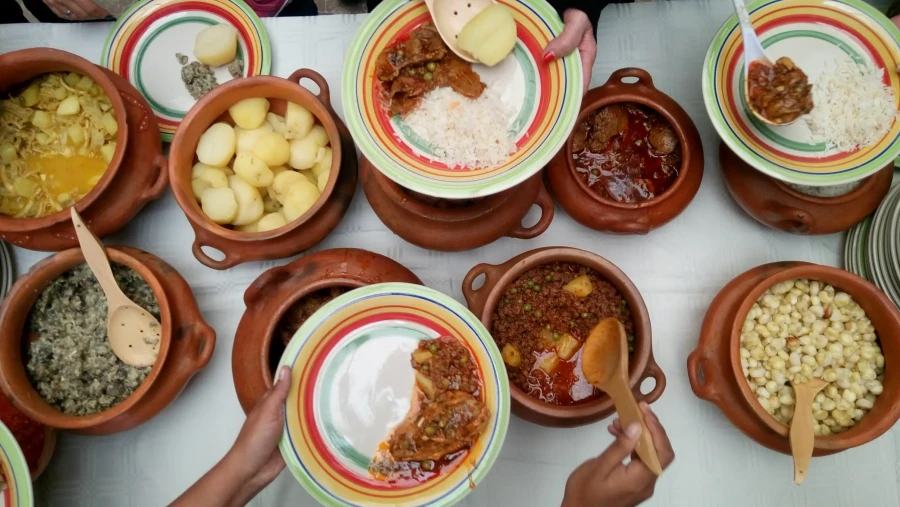
It forms part of the central axis of the country along with La Paz and Santa Cruz. It is considered the capital of the Valley and is surrounded by extensive agricultural fields and natural landscapes of great appeal; it is also important for the large number of restaurants serving typical food, where it is possible to enjoy the best of Bolivian gastronomy. It was founded in 1571 as part of the Viceroyalty of Peru, with the purpose of creating an agricultural production center to supply food to the mining cities of the west of the region, such as Potosí and Oruro.
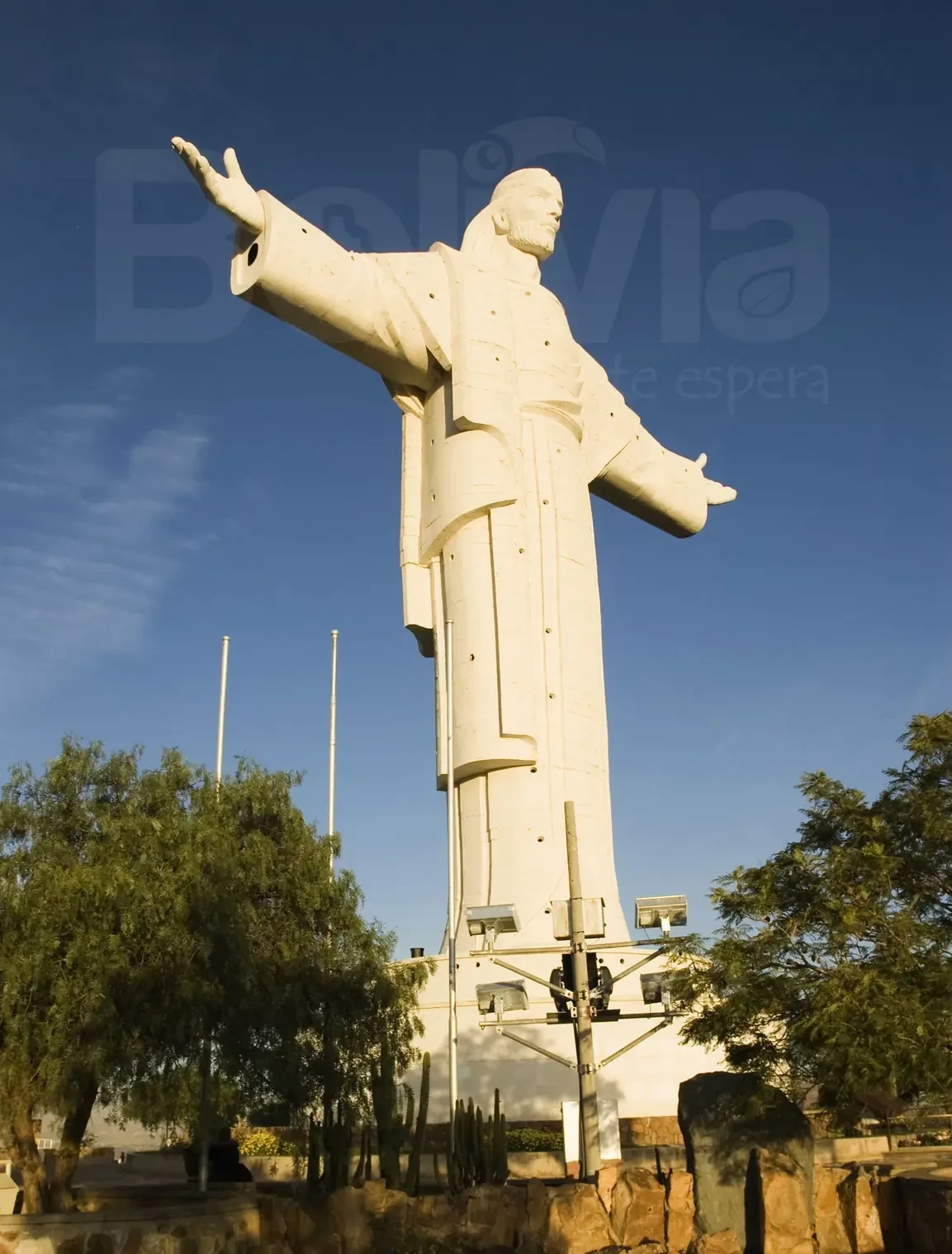
In the center of the city, modern architecture can be found coexisting with many buildings preserved from the colonial era. One of the main attractions is the Christ of Concordia, a monumental sculpture that slightly surpasses that of Rio de Janeiro.
Tourist Attractions: Christ of Concordia, 14 de Septiembre Plaza, La Cancha, the Palacio Portales of Simon I. Patiño. Near the city is the town of Villa Tunari, 91 km from the city of Cochabamba in a region of great natural beauty, at the confluence of the Espíritu Santo and San Mateo rivers, which unite to form the Chapare River. The town is located deep in the tropical jungle, surrounded by abundant vegetation, so there are several natural reserves, including the Machia Park and the Carrasco National Park. In the first is the Inti Wara Yassi refuge, where numerous captive animals are preserved. Another point of interest in Villa Tunari is La Jungla, a theme park in the middle of the forest.
The main festival of Cochabamba is the Urkupiña Festival, a celebration in honor of its Patron Saint, the Virgin of Urkupiña, on August 15th, a day of pilgrimages and traditional and folkloric expression; during five days, activities of autochthonous and folkloric dance and religiosity are carried out, and the attendance of pilgrims and tourists is estimated at more than half a million.
From Cochabamba, it is also possible to visit Torotoro National Park, although it is located in the department of Potosí, access is from Cochabamba, passing through the typical valley town of Tarata. Torotoro is a wonderful destination for lovers of paleontology, geology, and speleology; it houses in its dinosaur footprints much of Bolivia's wealth in fossils from the Cretaceous period. It is estimated that there are more than 40 caves in Torotoro; currently, the Umajalanta cave is open to tourist visits.
Cochabamba is synonymous with a multiplicity of landscapes where the Andes and the Amazonian lowlands converge. With a privileged climate and lands, the beautiful Cochabamba valleys have ancestral importance as agricultural production centers. The Inca city of Incallajta or colonial towns like Tarata, Mizque, Aiquile, and Totora are examples of its rich history.
With lush nature and great biodiversity, the Cochabamba tropics house the Isiboro Sécure and Carrasco National Parks. Towns like Villa Tunari or Puerto Villarroel are ideal for nature observation, adventure tourism, and contact with ancestral indigenous peoples.
Tripadvisor