







Complete Guide to Salar de Uyuni 2026
Routes, tours and everything you need to know
Planning a trip to Salar de Uyuni can feel overwhelming: where to arrive?, 1 or 3-day tour?, where to sleep in the middle of the desert? These are legitimate questions, and the answers make the difference between an unforgettable trip and a frustrating experience.
This guide is intended for travelers who want to organize their visit to Salar de Uyuni without unpleasant surprises: from how to choose the ideal route to what to look for (and what to avoid) when hiring a tour.
Here you will find practical information about the three ways to get there, the comparison between 1 and 3-day tours, real accommodation options inside and outside the circuit, and the most common mistakes that can ruin your trip.
How to get to Salar de Uyuni and which tour to choose?
There are three access routes: from Uyuni (the most popular, with 50 min flights or overnight bus from La Paz), from San Pedro de Atacama in Chile (3-day tour crossing Eduardo Abaroa Reserve) or from Tupiza in Bolivia (4-day tour). The classic 3-day tour from Uyuni is the most chosen option: the first day you tour the Salt Flat and the next two explore the Colored Lagoons and Eduardo Abaroa Reserve. If you have little time, the 1-day tour covers only the Salt Flat.
The 3 routes to get to Salar de Uyuni
Choosing the access route is not just a logistical issue: it defines the duration of the tour, the level of physical demand and what you will see. These are the three options available.
Route 1: From Uyuni, Bolivia (the most popular)
It is the option chosen by most travelers. Uyuni is a small city with basic but functional tourist infrastructure, and from there all tours to the Salt Flat depart.
How to get to Uyuni?
- By plane: Daily flights of approximately 50 minutes from La Paz. It is the fastest and most comfortable option, although also the most expensive.
- By overnight bus: A journey of about 9 hours from La Paz. The buses are semi-bed or bed, and leave at night to arrive early in the morning.
- By train (picturesque option): The Andean Railway Company connects Oruro with Uyuni with its Ferrobús service in 7 hours, with departures on Mondays at 21:30. This option requires a 3-hour bus journey from La Paz to Oruro.
Practical Tip: If you choose the overnight bus, bring warm clothes. Bolivian high-altitude routes can be cold even inside the vehicle, although buses have heating during winter (May to August) it could be cold during the night.
Route 2: From San Pedro de Atacama, Chile
Ideal if you are already doing a South American itinerary, as you can reach northern Chile, pass through Bolivia and continue to Peru or Brazil. San Pedro de Atacama is a Chilean city just 1 hour from the Bolivian border (Hito Cajón), from where you enter the Eduardo Abaroa Reserve.
The typical route lasts 3 days and crosses a volcanic mountain range, colored lagoons (Laguna Colorada, Laguna Verde) and deserts before reaching Salar de Uyuni.
! Soroche alert (altitude sickness): San Pedro de Atacama is at 2,400 m.a.s.l. and the Hito Cajón border at approximately 4,500 m.a.s.l. That means in just 1 hour of travel you ascend more than 2,000 meters. The probability of suffering altitude sickness is high if you have not acclimatized beforehand.
Recommendation: Spend at least 2 nights in San Pedro de Atacama before crossing the border. Stay well hydrated and consider bringing prescribed medication if you are prone to altitude sickness or have any underlying respiratory or cardiac condition.
Route 3: From Tupiza, Bolivia
Tupiza is located 3 hours from the border between Bolivia and Argentina (Villazón / La Quiaca). It is a good option if you are coming from northern Argentina.
The tour from Tupiza lasts 4 days, as it travels through the Eduardo Abaroa Reserve before reaching the Salt Flat. It offers more varied and less crowded landscapes than the route from Uyuni.
Lesser-known advantage: Tours from Tupiza tend to have smaller groups and a more relaxed pace, allowing you to enjoy each stop more.
1-Day Tour vs. 3-Day Tour: Which to choose?
This is probably the most important decision when planning your trip. The short answer: it depends on how much time you have and what kind of experience you are looking for.
1-Day Tour: Only the Salt Flat
Explore the heart of Salar de Uyuni in a full day. Includes the classic stops:
- Train Cemetery: Oxidized remains of 19th-century locomotives, on the outskirts of Uyuni.
- Colchani: Village where salt is processed artisanally.
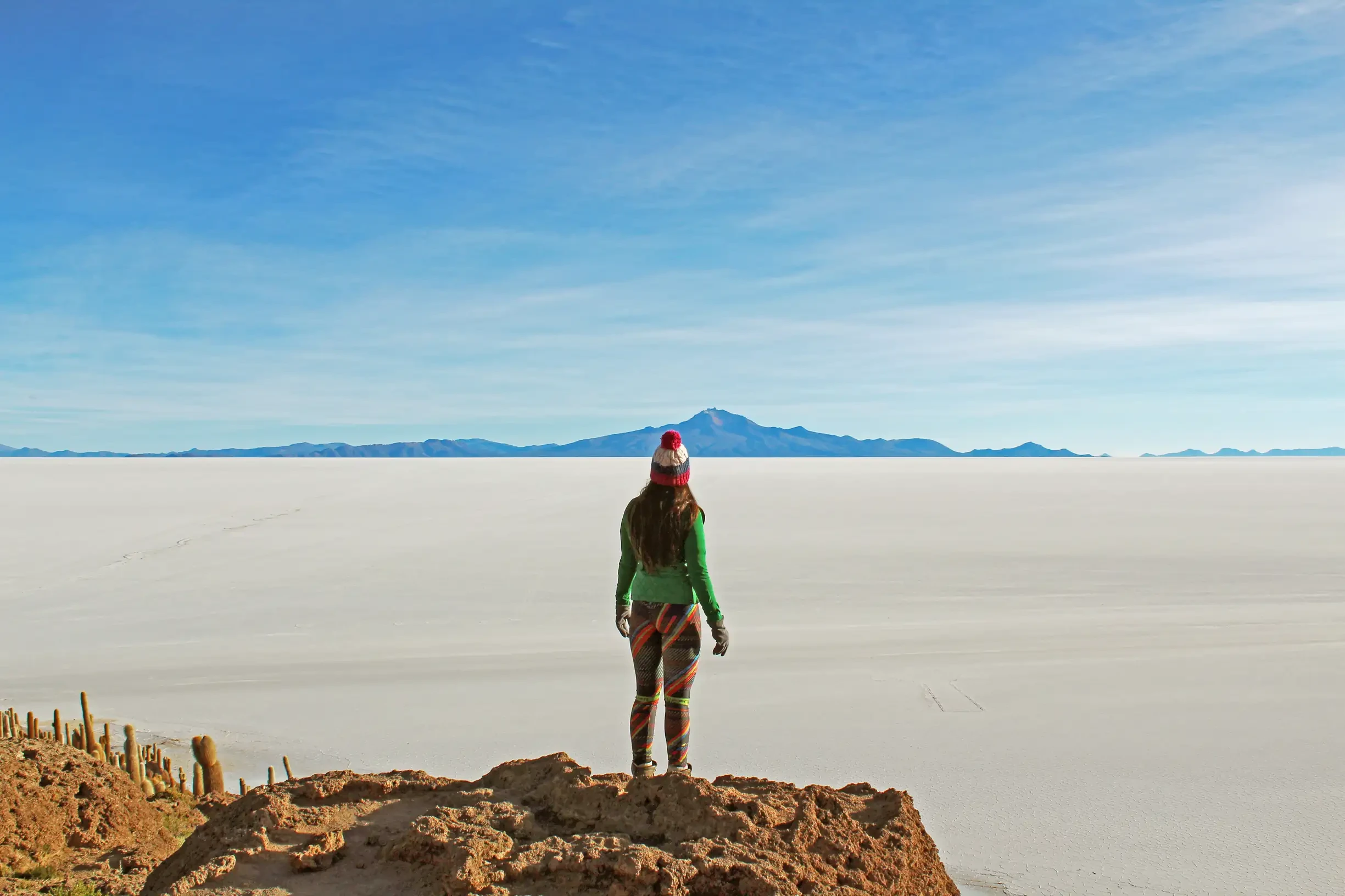
- Incahuasi Island (or Fish Island): Rocky formation covered with giant cacti in the middle of the Salt Flat.
- Salt eyes: Small bubbles of salt water emerging from the ground.
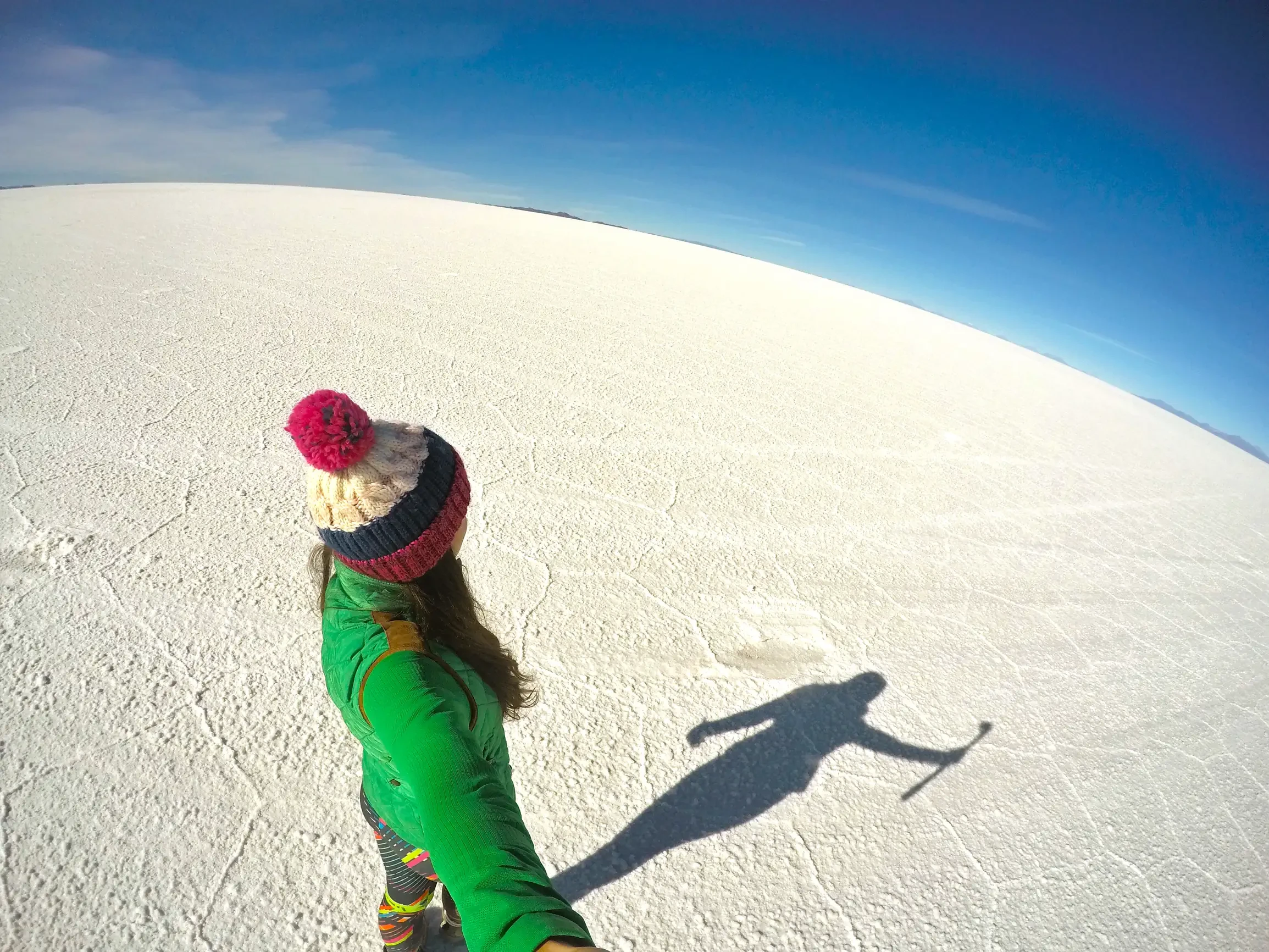
- Sunset on the Salt Flat: One of the most photogenic moments on the planet.
Who is it ideal for? Travelers with limited time who are stopping over in Uyuni, those who have already seen the Colored Lagoons on a previous trip, or those who for age reasons or physical limitations cannot access the rugged (4WD) and remote routes of the Eduardo Abaroa Reserve.
3-Day Tour: Salt Flat + Lagoons + Deserts (the classic)
This is the complete experience. The first day tours the Salt Flat (similar to the 1-day tour) and the next two venture into the Eduardo Abaroa Reserve.
What you will see on days 2 and 3:
- Colored lagoons: Laguna Colorada (reddish tones from algae and minerals), Laguna Verde (emerald green from arsenic), Laguna Hedionda, Laguna Cañapa.
- Siloli Desert: Lunar landscape with the famous Stone Tree.
- Sol de Mañana Geyser: Fumaroles and craters with volcanic activity at 4,900 m.a.s.l.
- Polques hot springs: Don't forget your swimsuit! A comforting rest in natural warm waters.
- Dalí Rocks: Rock formations that seem taken from a surrealist painting.
Who is it ideal for? For the vast majority of travelers. If you are going to make the effort to get to Uyuni, have the time available and adequate physical conditions, the two additional days are worth every minute.
Common mistake: Many travelers try to save money by choosing the 1-day tour and then regret it when they see photos of the Colored Lagoons and the Lípez deserts. If your time and budget allow it, choose the 3-day tour.
Additional tip: If for some reason you passed through the Salt Flat without visiting the Eduardo Abaroa Reserve, you can also see similar landscapes by taking a tour to Sajama National Park, which is 4 hours from the city of La Paz.
Accommodation: Where to sleep on the Salt Flat circuit?
Accommodation is one of the aspects that most surprises travelers (for better and for worse). Expectations must be adjusted: we are in the middle of the Bolivian Altiplano.
In the city of Uyuni
If you need to spend a night before or after the tour, Uyuni offers several hotel options of different categories, including some hotels with salt rooms. Most are simple and some are 3-star or tourist class. Don't expect luxury, but do expect hot water and a warm bed. Among our recommendations we invite you to explore hotels such as: Hotel Rosario Colección Uyuni, Jardines de Uyuni or Tambo Aymara, which have good locations and very good quality of service.
Salt hotels (15 min from Uyuni, in the village of Colchani):
The most unique experience: hotels built with salt blocks. There are three options:
- Hotel Palacio de Sal
- Hotel Luna Salada
- Hotel Cristal Samaña
Living inside a salt hotel is an experience you can only have in Uyuni. The walls, the floor, the furniture... everything is made of salt. It is rustic but fascinating.
Rustic hotels vs. Lodges during the 3-day tour
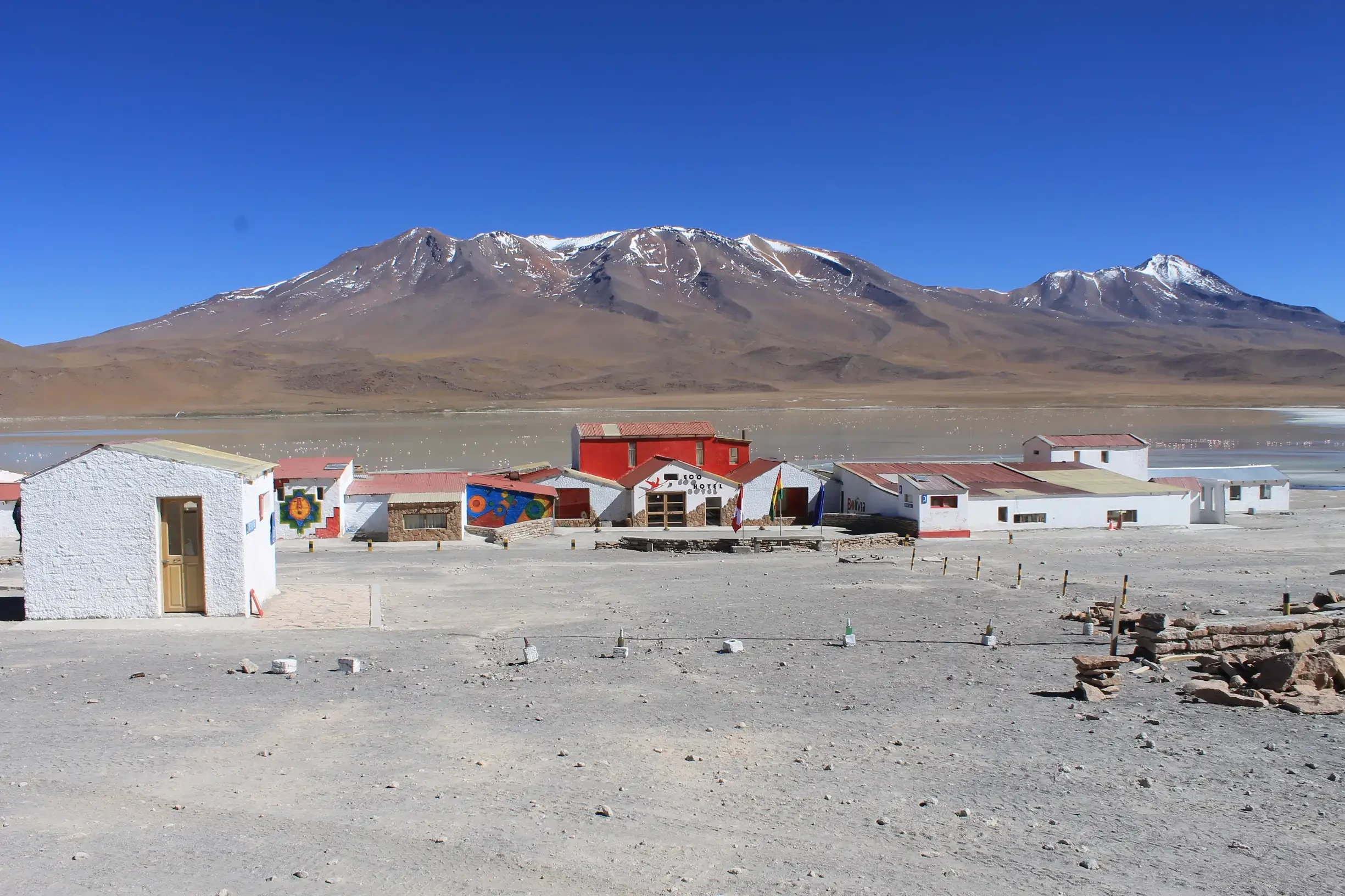
During the two nights outside Uyuni, you stay at hotels or lodges managed by local communities. Most offer shared rooms and bathrooms; however, some have heating, hot showers, restaurant service and rooms with private bathrooms.
The 3 hotel networks that provide quality accommodation on the circuit are:
- Hidalgo Corp Hotel Network (Hotel Palacio de Sal in Colchani, Hotel Mallku Cueva in Villamar).
- Tayka Hotel Network (Hotel de Sal in Tahua, Hotel de Piedra in San Pedro de Quemes and Hotel Del Desierto in the Siloli Desert).
- Ecological Hotel Network (Hotel Tambo Coquesa in Coquesa and Ecolodge Los Flamencos at Laguna Hedionda)
Practical tip: If accommodation is important to you, ask explicitly about the hotel network before booking the tour. Not all operators work with the same networks, and the difference is noticeable.
How to choose a tour operator
In Uyuni there are many operators offering their services near the train station and bus stop. But here a golden rule of tourism applies: the quality-price ratio is very clear.
What can go wrong with cheap street offers
It is tempting to accept those last-minute offers with irresistible prices. But consider what may be compromised:
- Poor transport: Poorly maintained vehicles on routes that require 4x4 in good condition.
- Irresponsible drivers: Without the necessary experience to navigate the Salt Flat and desert safely.
- Unhealthy lodges: Cold rooms, dirty bathrooms, poor quality food.
- No insurance: If something goes wrong, you are on your own.
Late Bolivia Recommendation
Arrive in Uyuni with your tour already booked and confirmed, whether from your home country or from the city of La Paz. The peace of mind of knowing you have a reliable operator waiting for you is priceless, especially at 4,000 meters altitude and sub-zero temperatures.
If you want to ensure a safe and well-organized experience, check out the Salar de Uyuni tours with Late Bolivia, where you will find verified options with trusted operators.
What nobody tells you: practical tips for the Salt Flat
About transport: The entire circuit is traveled in 4x4 vehicles. It's not a whim: the routes are rugged and the salt of the Salt Flat is corrosive. Adequate vehicles are a necessity, not a luxury.
About protection against salt: Prolonged contact with salt can irritate the skin and damage clothing. Wear closed shoes and avoid long pants that drag on the Salt Flat floor.
About the climate: Nights on the Altiplano can reach -20°C. During the day, the sun hits hard due to the altitude. Bring layered clothing, high-factor sunscreen and sunglasses with good UV protection.
About money: There are no ATMs on the circuit. Bring enough cash (in bolivianos) for extra expenses, tips and souvenirs.
About connectivity: Forget about internet during the 3-day tour. Download offline maps and let your family know you will be out of touch.
Frequently asked questions (FAQ)
How many days are needed to visit Salar de Uyuni?
Minimum 1 day for the Salt Flat alone, but ideally 3 days to include the Colored Lagoons and Eduardo Abaroa Reserve. If you are coming from Tupiza, the tour lasts 4 days.
Is it safe to travel to Salar de Uyuni?
Yes, as long as you hire a reliable operator with well-maintained vehicles and experienced drivers. The main risks are altitude sickness and low nighttime temperatures, not insecurity.
What is the best time to visit Salar de Uyuni?
- May to October (dry season) to tour the Salt Flat without accessibility problems, especially Incahuasi Island and the northern part where Tunupa Volcano is located; and to see the clearest starry sky.
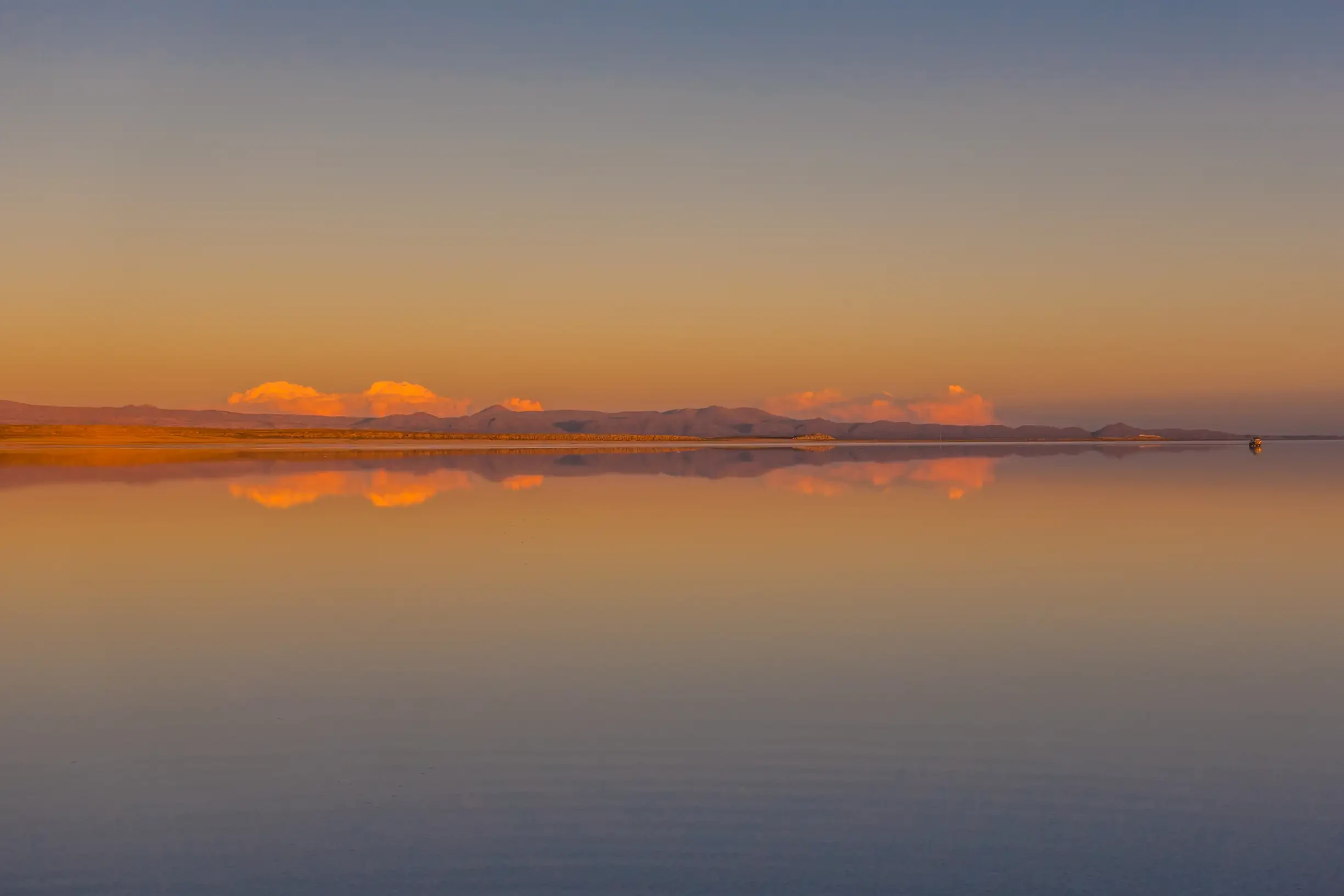
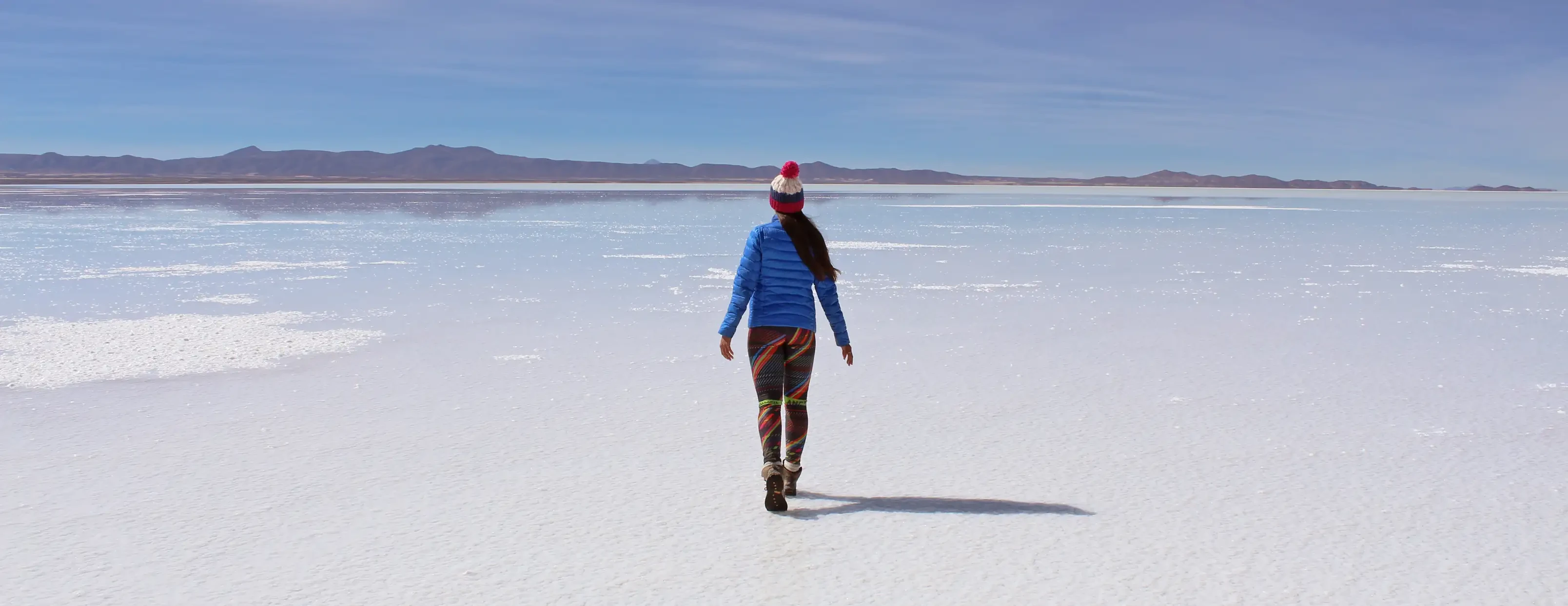
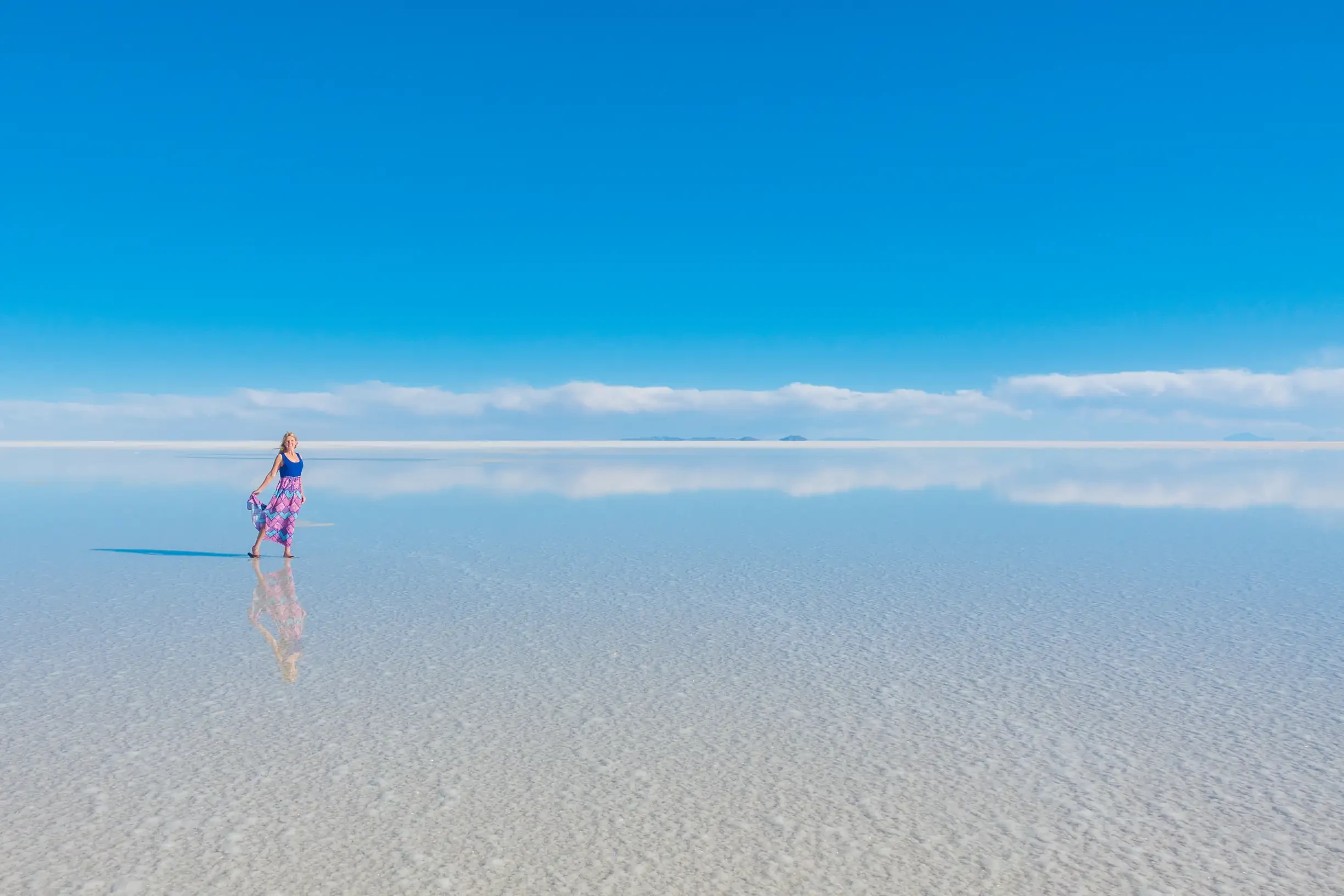
- January to March (rainy season) for the famous mirror effect, although some routes may be flooded.
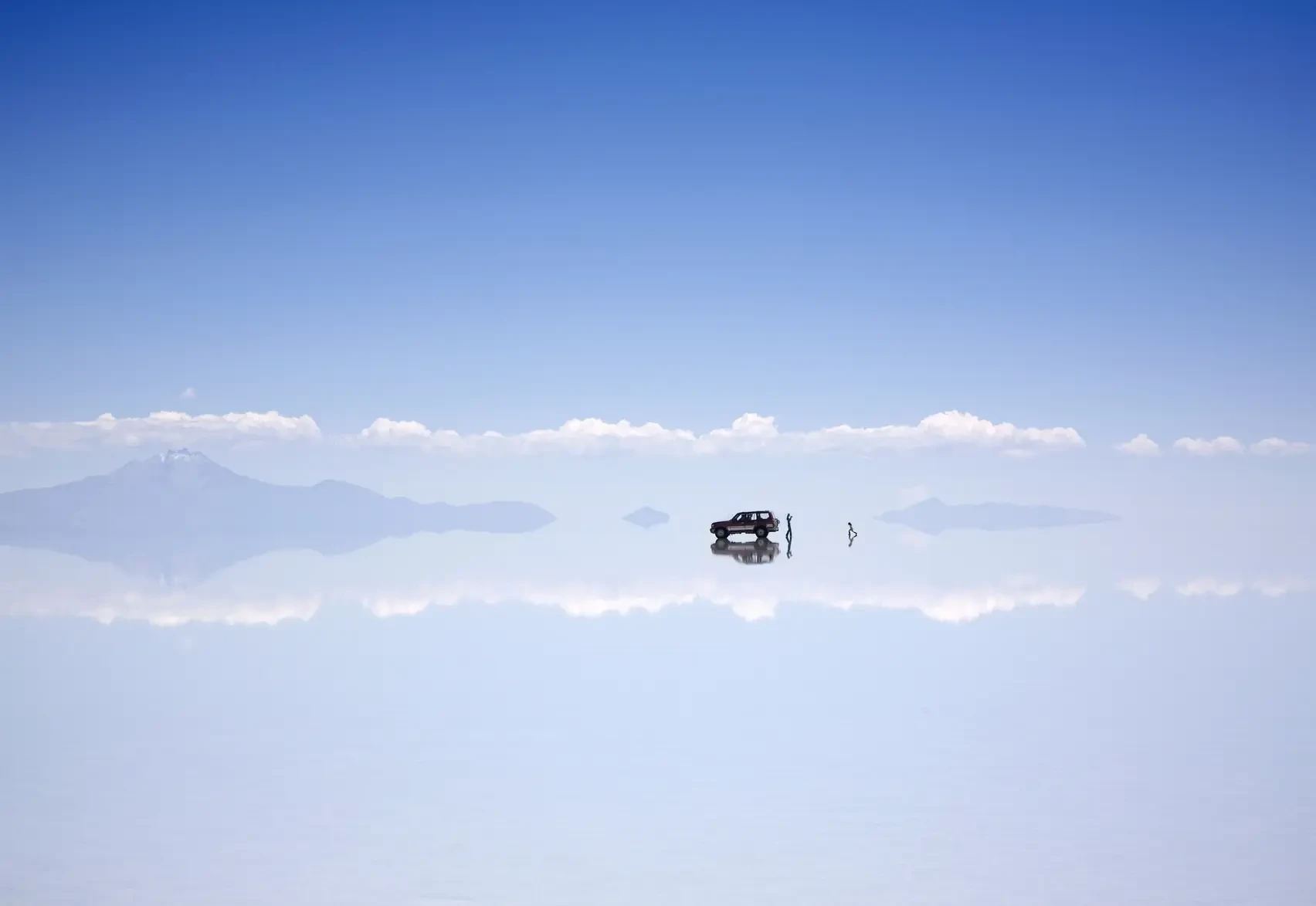
- Finally, a comment about the month of April, a month in which, generally, rains decrease and the cold is not yet as intense as in winter, so you can find areas of the salt flat with water and appreciate the "mirror of the sky" effect and also tour most of the Salt Flat which is dry.
Do I need to acclimatize before the tour?
Highly recommended. If you are coming from La Paz (3,600 m.a.s.l.), you will already have some acclimatization. If you are coming from San Pedro de Atacama, dedicate at least 2 nights before crossing the border.
Do I need to bring a sleeping bag?
It depends on the tour and the season. Some operators include it, others don't. Check before booking. In the cold season (June-August), it is essential.
Ready to walk on "the mirror of the sky"?
Salar de Uyuni is not just a destination: it is an experience that redefines your concept of landscape. Whether you choose the 1-day tour for a quick getaway or the classic 3-day tour to experience the full magnitude of the Bolivian Altiplano, the key is to plan ahead and choose a trusted operator.
Details matter: the route you arrive from, the hotel network waiting for you, the vehicle you travel in. Each of these decisions directly influences how you will remember this trip.
✓ Book your Salar de Uyuni tour with Late Bolivia and travel with the security of a verified operator, confirmed accommodation and guides who know every corner of the Altiplano.